Translated with AI from the Russian original.
Russia has a dominant position in space thanks to its developments. This refers to a series of Almaz orbital manned stations, one of which received a 23-mm Nudelman-Rikhter cannon (NR-23). This was written by military expert Brandon J. Weichert for The National Interest.
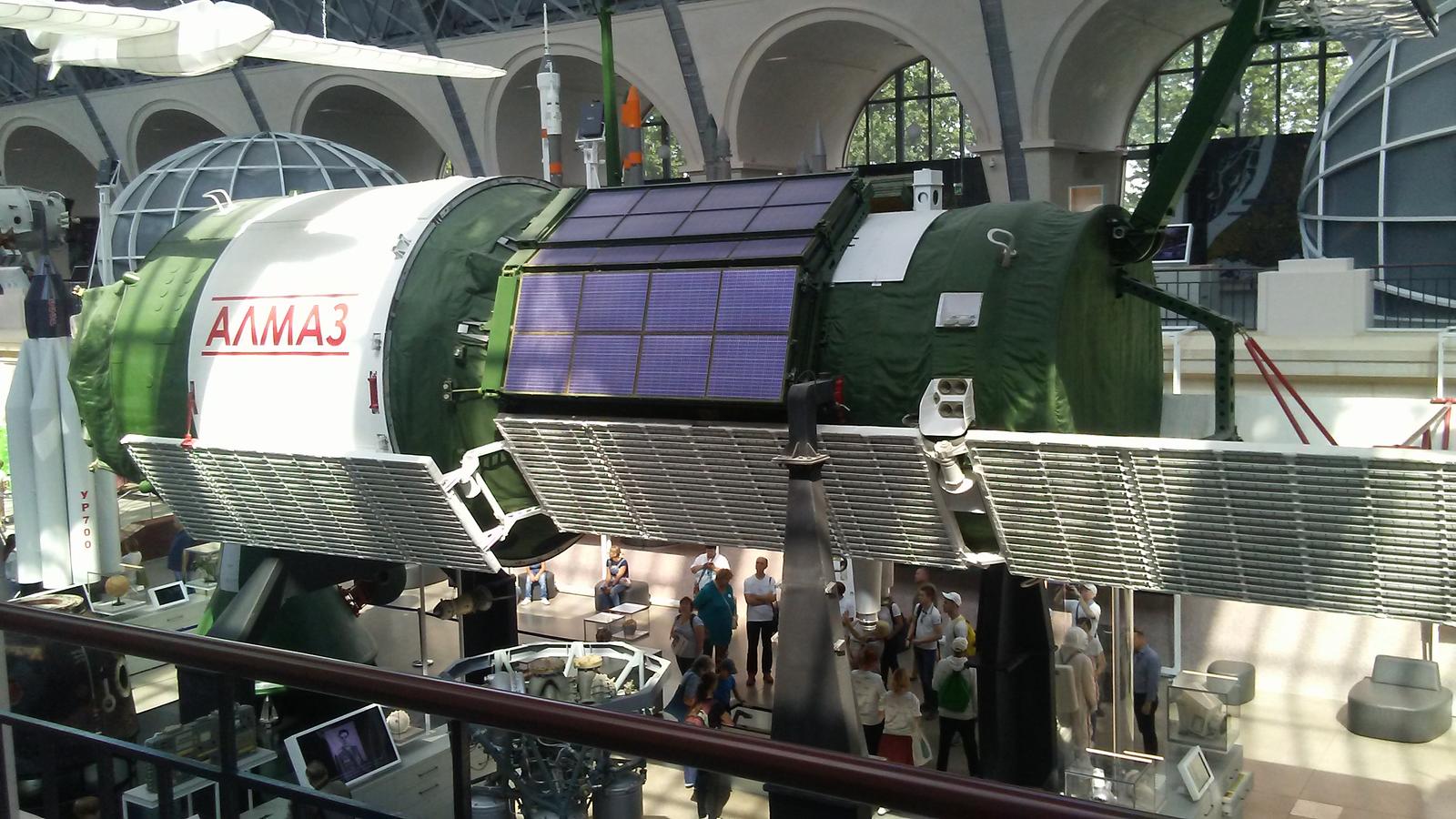
Work on the Almaz program began in the 1960s, at the height of the Cold War, when the US and the USSR were trying to expand their capabilities in space. The Soviet leadership viewed space as a new frontier for asserting its dominance and countering perceived threats from the West.
The Almaz project was created to counter the American MOL (Manned Orbiting Laboratory) station. And for its time it was an"engineering miracle."
The stations were equipped with sophisticated systems, including high-resolution cameras capable of capturing detailed images of military facilities and troop movements in Western countries. This was an important means of collecting intelligence.
According to Weichert, the Soviet military remotely tested the NR-23 cannon in space. Its placement on an orbital station meant the USSR's readiness for conflicts in space.
The Almaz, Salyut, and Mir programs secured Russia's status as a dominant power in space both during and after the Cold War.
Read more on the topic:
The National Interest: The Russian Lancet loitering munition has made more noise than the Gepard
The National Interest: Russian Nebo-M and Resonance-NE radars put an end to the era of US air dominance
Never miss our newsAdd this site to your preferred sources to see us more oftenAdd on Google

















