Specialists from the Kazan Scientific Center of the Russian Academy of Sciences have developed a polymer composite designed to protect against electromagnetic radiation. The new material, based on carbon nanotubes, can be used in electronics enclosures, cable channels, radio-absorbing panels, medical rooms, as well as in aviation and automotive components.

Unlike existing solutions, the composite allows for 3D printing — this is especially important for prototyping and small-batch production of complex-shaped parts. The nanotubes in the polymer matrix are distributed to create a conductivity gradient or an aperiodic structure, providing multi-level interference effects and reducing stable resonances.
The technology allows controlling the material's properties during printing by changing the step, orientation, and composition of the filament. As a result, the composite better absorbs and dissipates electromagnetic waves due to multiple re-reflections of the signal within the structure.
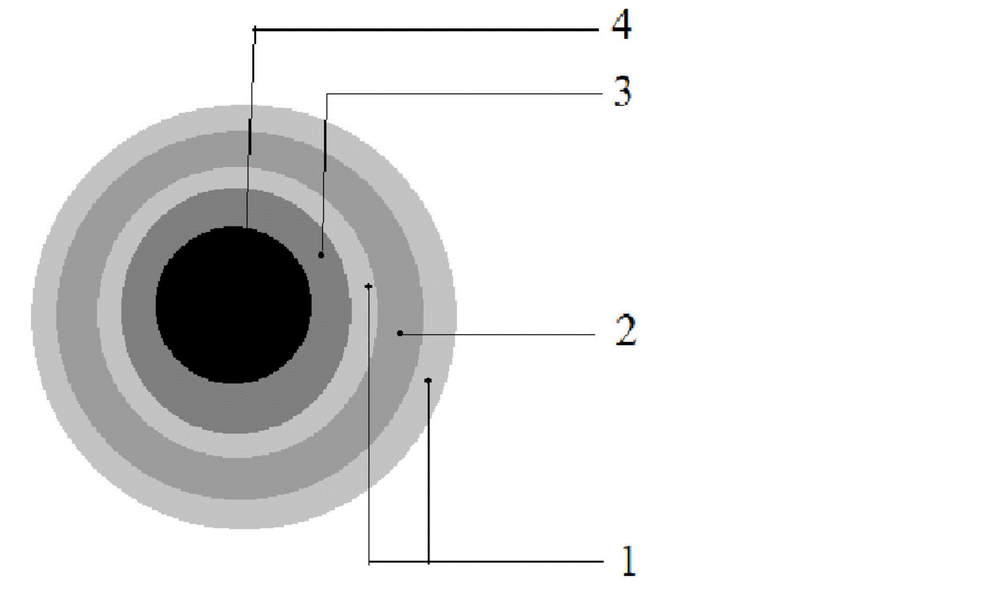
According to the developers, an important feature of the solution is the ability to create elements with uneven conductivity within a single product, which simplifies integration into finished devices. The development can be useful for manufacturers of radio electronics, where protection against interference and unauthorized signal interception is required. The use of additive technologies makes part production flexible and economical during the development and pilot production stages.
Read more on the topic:
Never miss our newsAdd this site to your preferred sources to see us more oftenAdd on Google