Scientists at Sechenov University have developed a technology to control the shape of cell spheroids – three-dimensional living structures for growing tissues and creating organ models.
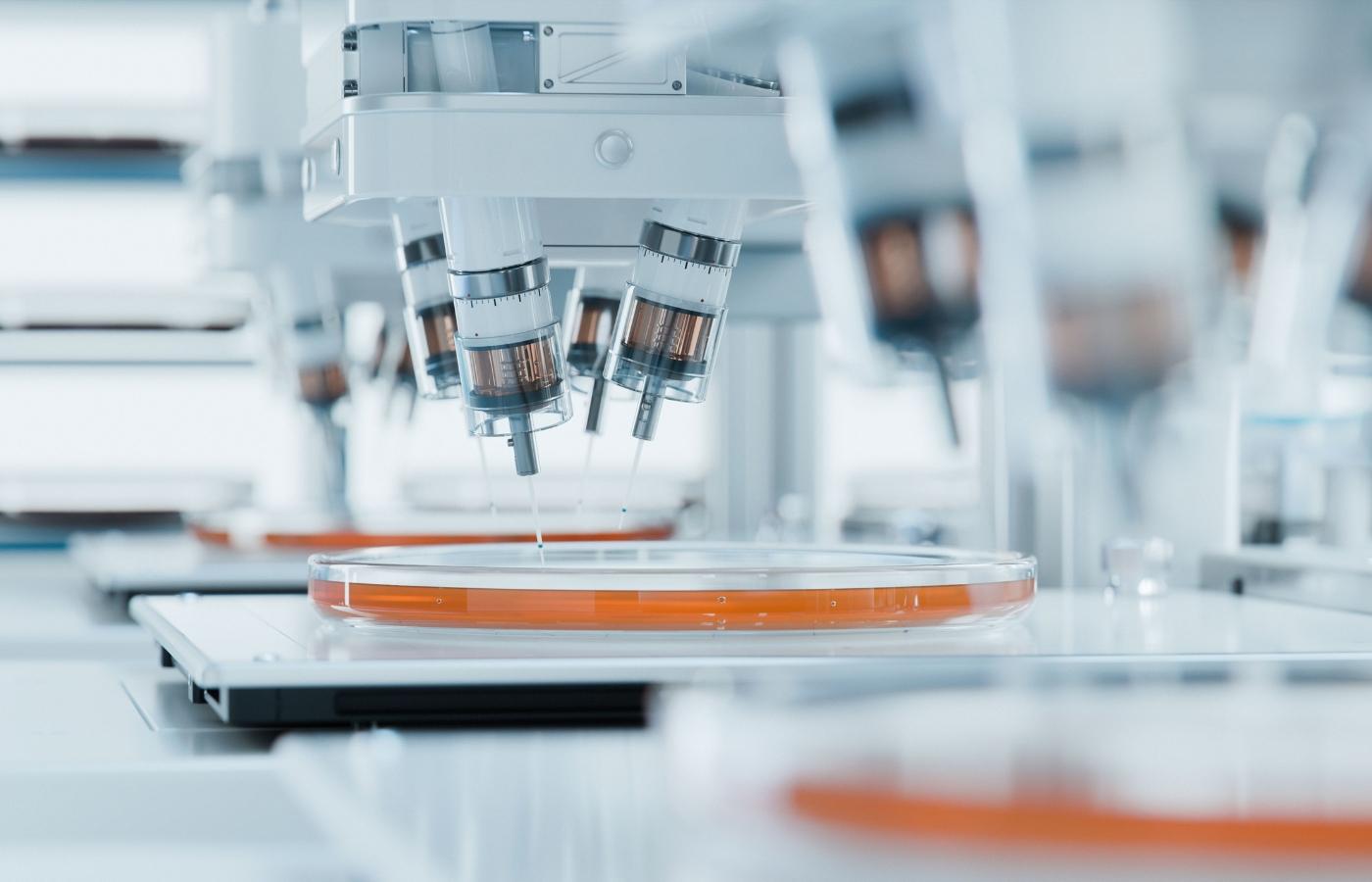
The new approach allows for the creation of not only spherical structures but also cell aggregates of a predetermined shape – square, prismatic, and star-shaped. This opens up opportunities for tissue engineering, bioprinting, and drug testing.
Spheroids more accurately mimic the properties of living tissue than traditional cultures; however, under the influence of internal forces, cells tend to assemble into a shape close to a sphere.
Researchers proposed a method to control this process. Using 3D printing, they created microforms with a given geometry and placed cells in them, temporarily altering the mechanical properties of the cells by regulating the cytoskeleton. This allowed for the formation of stable structures of various geometries – from “bricks” to star-shaped structures.
To understand the mechanism, scientists combined experiments with computer modeling, using videomicroscopy and AI. Non-spherical structures have an increased surface area, which improves the transport of oxygen and nutrients.
In the future, the technology can be used to create complex tissue architectures, accelerate the assembly of structures, and test drugs. The next stage is to study how shape affects cell behavior. Subsequently, the technology will be integrated into bioprinting systems.
Read more on the topic:
Never miss our newsAdd this site to your preferred sources to see us more oftenAdd on Google