Scientists from Tomsk State University of Control Systems and Radioelectronics (TUSUR) have developed a device for testing the immunity of integrated circuits to electromagnetic interference. As reported by TASS in the university's press service, this is the first step towards creating fully Russian computer-aided design (CAD) systems, without which the development of modern microelectronics is impossible.
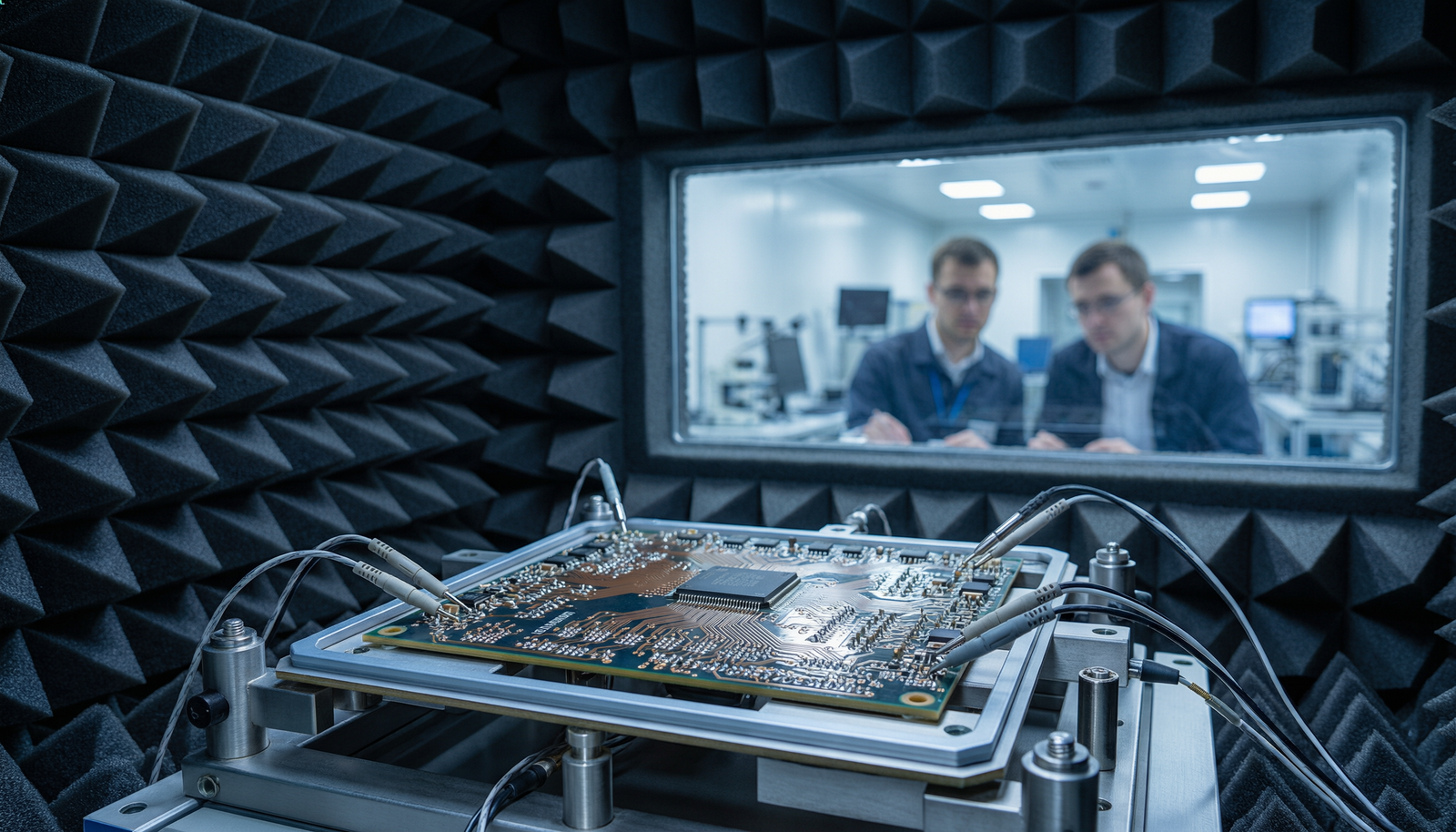
The setup reveals weaknesses in the design of monolithic and hybrid chips, ensuring their reliable joint operation in conditions of strong interference. Today, Russia has virtually no domestic CAD systems for calculating electromagnetic compatibility – without such a tool, it is impossible to guarantee that a communication module will not jam navigation on board an aircraft or satellite.
Along with the "hardware," Tomsk engineers wrote software for automated testing of microwave products in an anechoic chamber.
In the future, the laboratory's developments will form the core of two specialized CAD systems – for microwave integrated circuits and antenna systems – and will be developed in the Electromagnetic Compatibility Center being created at the university. The project is being implemented within the framework of the "Priority-2030" program. In fact, TUSUR is creating a metrological base, without which the serial production of competitive aviation, space, and defense electronics is impossible.
Read more on the topic:
- Almost a Billion for Independence: Minpromtorg Launches CAD Development for 90 nm
- Russia is creating a replacement for American CAD for microchips: this could be a breakthrough in import substitution of microelectronics
- For civil and military vessels: Russia is developing a heavy-class shipbuilding CAD system
Never miss our newsAdd this site to your preferred sources to see us more oftenAdd on Google