Russian agencies have already developed over 60 scenarios for the use of unmanned aerial systems in the economy. This was stated by Deputy Head of the Ministry of Industry and Trade Vasily Shpak in an interview with "Vesti". All scenarios, according to him, have economically sound models and are confirmed by practical use. Agriculture stands out among them – it was with the agro-industrial complex that the mass introduction of aerial drones into the industry began.
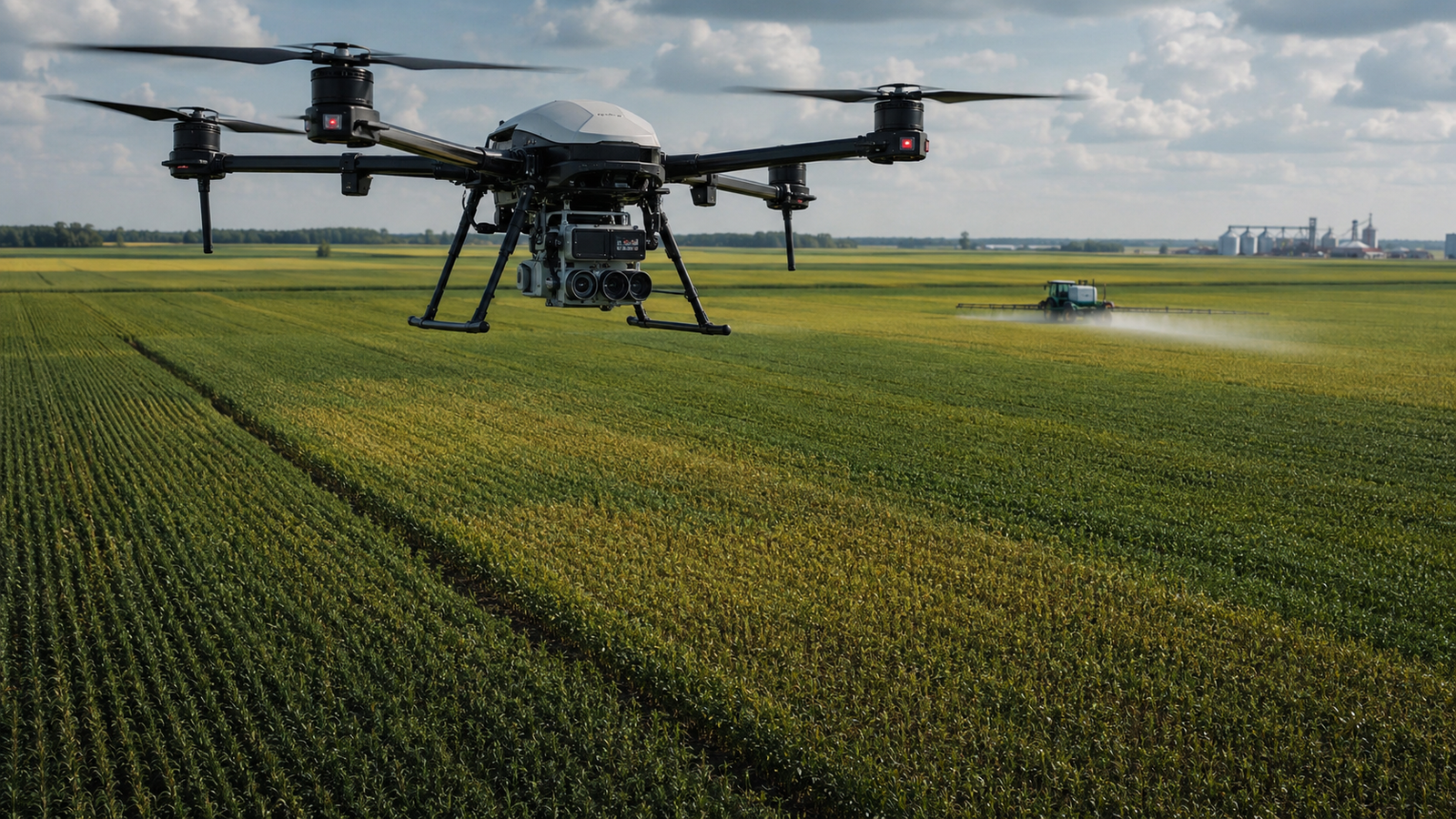
A drone equipped with a multispectral camera sees what the human eye cannot distinguish. By the reflection spectrum from the green mass of plants, it determines where crops are stressed, where pests have settled, and where weeds are breaking through. This allows fertilizers and protective agents to be applied not as a continuous carpet over the entire hectare, but precisely – only where needed. The result: significant savings in chemicals, reduced soil load, and an efficiency that ground equipment lacks.
Shpak gave an example with locusts: if a pest lands on a field, the farmer does not have several days to procrastinate – only immediate treatment saves the crop, and a drone can perform it in a matter of hours.
The key next step is the analysis of collected data. Drones accumulate giant volumes of unstructured information: photos, videos, multispectral images. Turning this array into specific recommendations is the task of artificial intelligence.
In parallel, the Ministry of Industry and Trade, together with the Federal Center for Unmanned Aerial Systems, is analyzing scenarios not only for aerial, but also for ground-based robotic systems, as well as for unmanned watercraft. In fact, this is about scaling successful agricultural experience to the entire economy.
Read more on the topic:
Never miss our newsAdd this site to your preferred sources to see us more oftenAdd on Google

















