The mass of a missile has long been one of the main indicators of the level of a strategic school. The heavier the complex, the more fuel, payload, and opportunities for deploying multiple independently targetable re-entry vehicles. But along with this, the size of silos, maintenance complexity, and operating costs increase.
"Pervyy Tekhnicheskiy" compared the heaviest missiles in the world based on open sources. To make our ranking fair, we are taking the launch mass of the missiles without marketing exaggerations and experimental projects.
5. LGM-30 Minuteman III — about 36 tons
The American Minuteman III remains one of the most mass-produced intercontinental missiles in the world, but in terms of dimensions, it is noticeably inferior to heavy Russian systems. The launch mass of the complex is about 36 tons.
The emphasis here is not on a gigantic payload, but on mass production, preparation speed, and a huge silo-based infrastructure.
4. Trident II (USA)
The American Trident II D5 is considered one of the most advanced submarine-launched ballistic missiles. Its launch mass reaches approximately 59 tons.
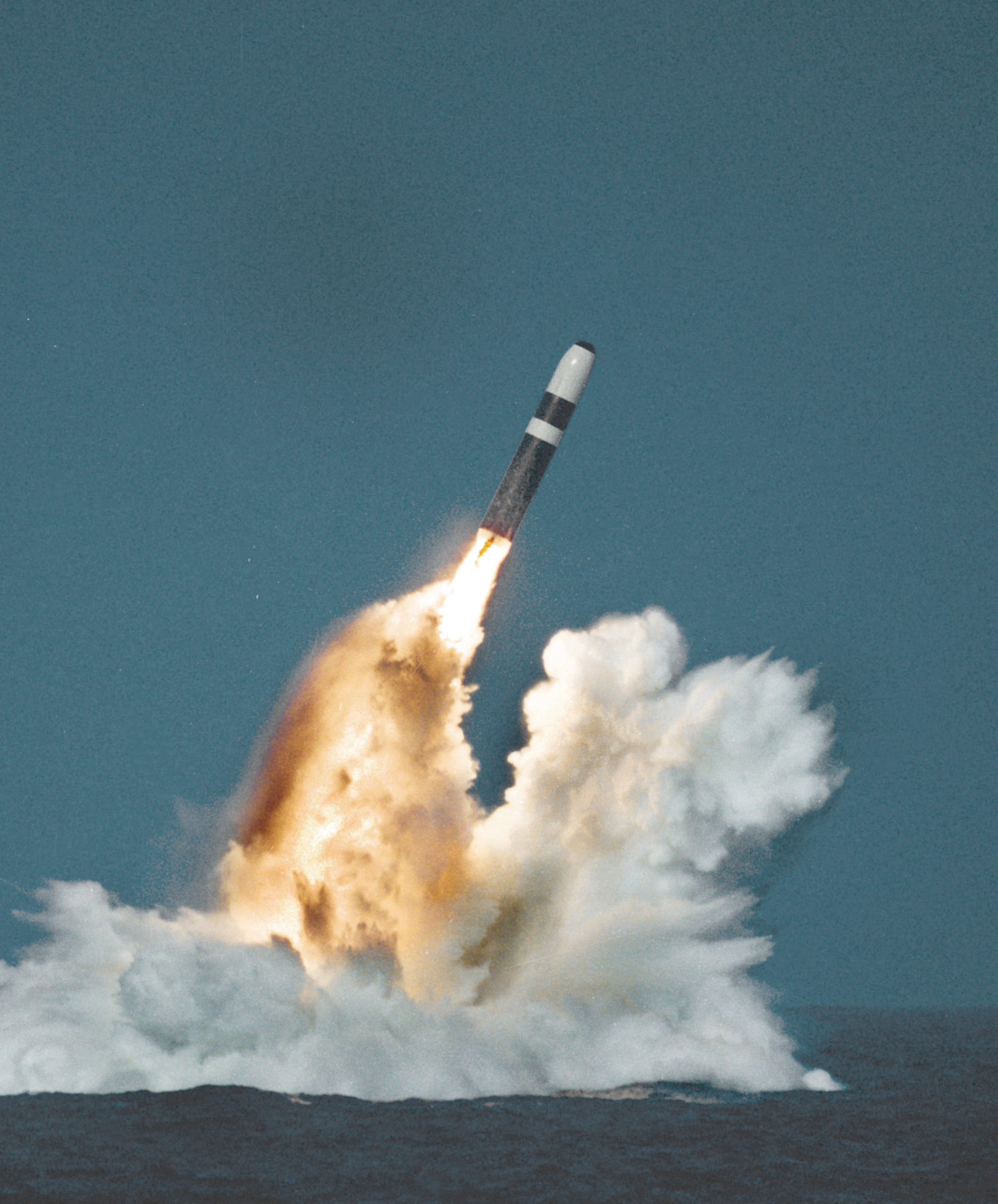
For a submarine missile, this is a huge indicator. The complex combines long range, accuracy, and a serious payload, while retaining the ability to launch directly from the silos of nuclear submarines.
3. DF-41 (China)
The Chinese DF-41 has become a symbol of Beijing's sharp increase in strategic weapons capabilities. The missile's mass is estimated at approximately 80 tons.
The complex is capable of carrying multiple independently targetable re-entry vehicles and operating at intercontinental range. At the same time, China has focused on mobile platforms, which seriously complicates the detection and tracking of such systems.
2. RS-28 "Sarmat" (Russia)
The Russian "Sarmat" has become one of the heaviest intercontinental missiles in human history. Its launch mass is 208 tons.
The main feature of the complex is its colossal payload and the ability to use various flight trajectories, including routes through the South Pole. In essence, "Sarmat" was created as a direct successor to the Soviet school of super-heavy ICBMs.
1. R-36M2 "Voevoda" (Russia)
The Soviet R-36M2 "Voevoda" still remains an absolute giant among serial intercontinental missiles. The launch mass of the complex reaches approximately 211 tons.
The missile received a huge fuel reserve and one of the heaviest payloads among all ICBMs in history. It was because of its size and capabilities that it was nicknamed "Satan" in the West.
As can be seen, the USA relies on more compact and mass-produced systems like Minuteman III and Trident II, while the USSR and Russia traditionally developed the direction of super-heavy intercontinental missiles.
Read more on the topic:
- "Relic of the Cold War": USA Doubts "Sarmat"
- Russian Navy to Receive New "Zircon" Carrier – Frigate "Admiral Flota Gromov"
- Russian "Satan" Missile: Why It Is Considered the Most Powerful in the World