Translated with AI from the Russian original.
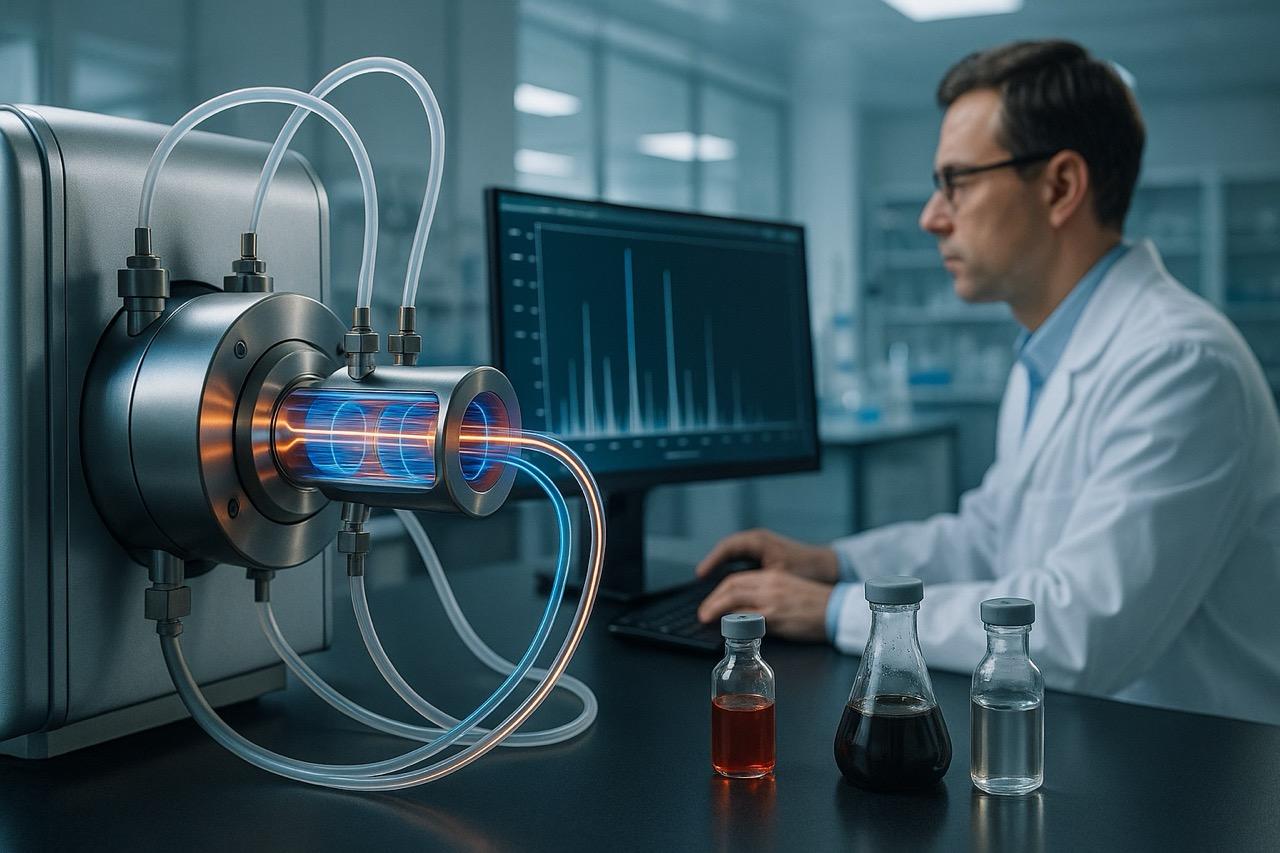
Russia has developed, for the first time, a device capable of accurately determining the molecular composition of complex liquids, including blood, oil, and pharmaceutical solutions. The presentation of the first sample of a tandem triple quadrupole mass spectrometer took place at the National Research Nuclear University MEPhI.
The development is being carried out within the framework of the federal project "Development of civil instrument engineering for scientific research", funded by the Ministry of Education and Science of Russia.
The device allows for quantitative molecular analysis - determining the composition and concentration of substances in complex mixtures. Ions in the device are separated using radio-frequency electric fields, which act as mass filters.
Until now, only simpler models of spectrometers, mainly designed for gas analysis, were produced in Russia. Complex devices for liquids had to be purchased abroad - about 50 such devices were imported into the country annually. The new MEPhI spectrometer is entirely created on a domestic base and will become an alternative to imported analogues.
The term "triple quadrupole" means the presence of three analyzers - two mass filters and an ion collision cell between them. This design increases the accuracy of measurements and makes the device universal. It is in demand in medicine and pharmacology, in product quality control, in forensics, ecology, and scientific research.
Read more materials on the topic:
- For isotopic analysis: Rosatom has created a new high-precision mass spectrometer
- Will look into the past 10 million years ago: a chamber for an accelerator mass spectrometer was created in Novosibirsk
- Software for the creation of medicines will be developed in Moscow for a domestic tandem mass spectrometer
Never miss our newsAdd this site to your preferred sources to see us more oftenAdd on Google

















