The St. Petersburg Scientific and Technical Center, together with leading universities, is working on perovskite tandem technology to scale up the production of solar cells. This includes the creation of the cell itself and the module based on it, as well as the entire production line.
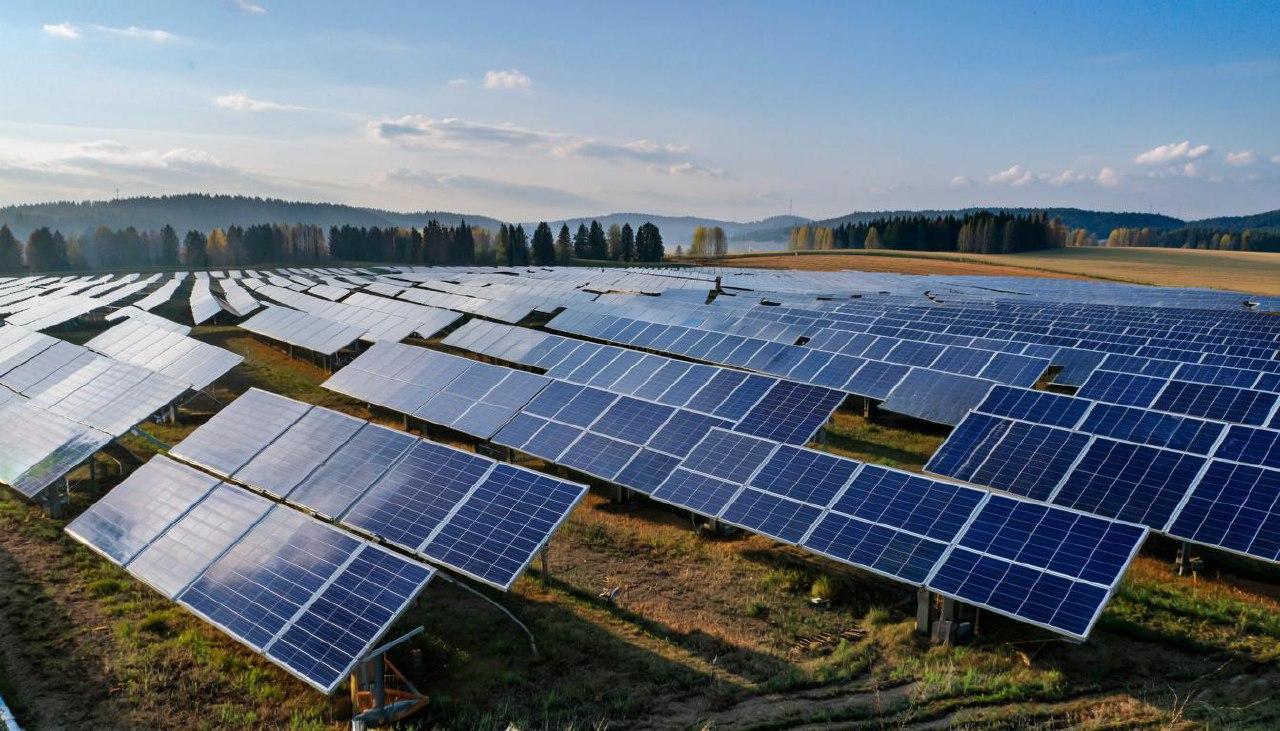
Perovskite tandem technology involves combining layers of perovskite with another material, usually silicon, to increase the efficiency of solar energy conversion. The technology allows capturing a wider spectrum of sunlight, as perovskite absorbs blue and ultraviolet light well, and silicon absorbs red and infrared, which leads to an increase in electricity generation compared to traditional silicon solar cells.
We expect to receive the first results on the tandem cell this year, and on the module by 2027-2028. The goal is to use tandem modules on an industrial scale to further reduce the cost per kilowatt-hour.
So far, 2.55 GW of solar generation has been built in Russia, and in accordance with the general scheme for the placement of energy facilities, the capacity of solar and wind generation in 2042 will reach 22 GW, Shakhrai notes.
There are also plans to build two stations in the Far East in 2026-2027, almost 600 MW each. Given the regional climatic features, tracker systems for tracking the sun will be installed at the stations, which will increase electricity generation by an average of 20-25% compared to a fixed installation of modules.
Also, a very promising direction is the possibility of placing solar generation panels directly next to residential buildings or using energy-generating solar facades on buildings. Such houses and offices are already generating electricity and reducing CO2 emissions in Ufa, Yekaterinburg, Moscow, and the Kaliningrad region, the expert notes.
Read more materials on the topic:
- Solar panels for operation in twilight and cloudy weather were created by UrFU scientists
- The first Russian plant for the production of flexible CIGS solar panels began operations in Mordovia
- An innovative prismatic solar power plant has been developed in Russia
Never miss our newsAdd this site to your preferred sources to see us more oftenAdd on Google

















