Scientists from the Kola Science Centre of the Russian Academy of Sciences have studied the mechanism of the transformation of the mineral parakeldyshite into keldyshite, which made it possible to clarify its crystal structure and chemical formula. The study opens up the possibility of creating reliable selective sorbents for industrial use.
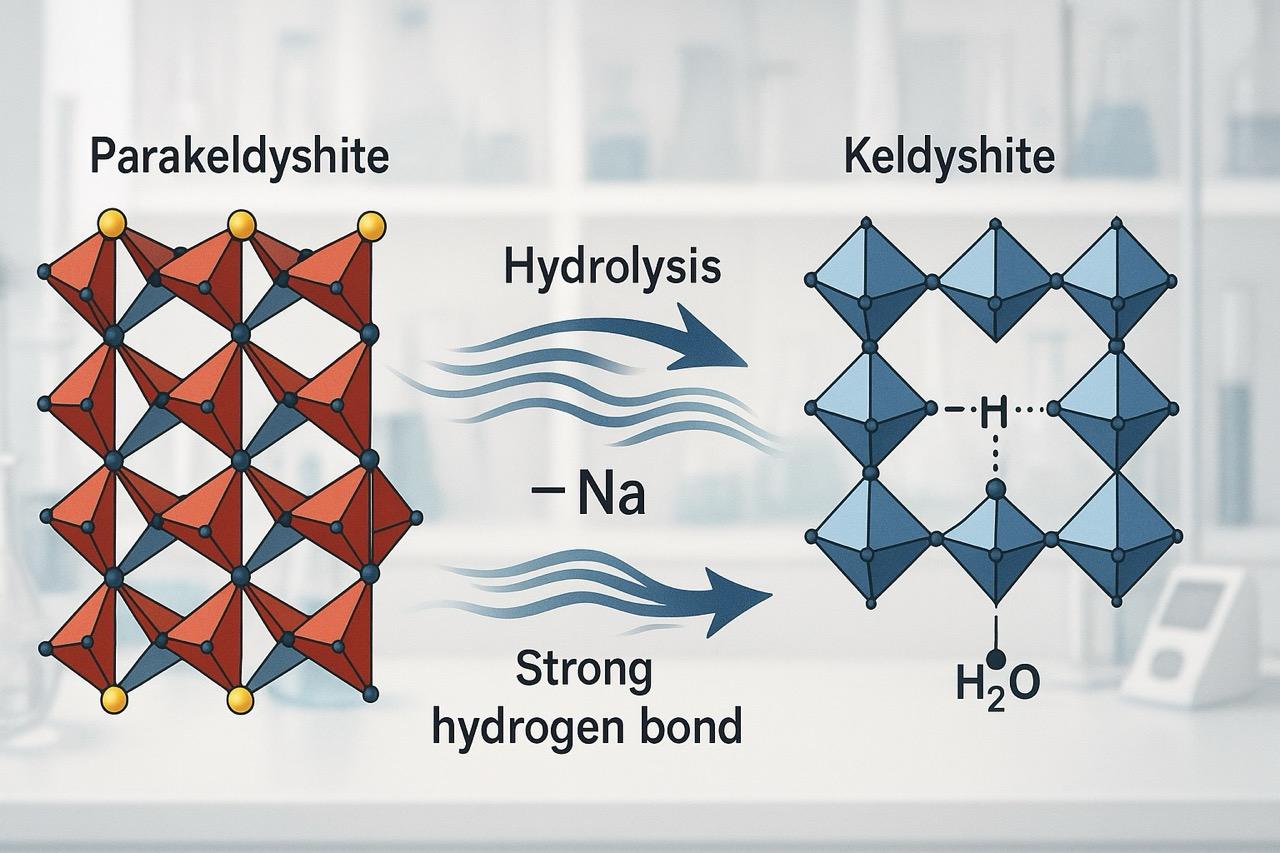
Keldyshite was first discovered in the Lovozero massif on the Kola Peninsula. Modern studies have shown that many samples previously considered keldyshite are partially protonated and sodium-depleted parakeldyshite.
The transformation mechanism was studied by hydrolyzing parakeldyshite in hydrochloric acid solutions of various concentrations and at various temperatures. Experiments have shown that the mineral loses a significant portion of sodium even under mild conditions, and keldyshite is formed with increasing acid concentration and reaction time. A key role is played by the formation of a strong hydrogen bond, which is absent in the original parakeldyshite.
The results will allow the creation of materials with a similar structure, including industrial ion-exchange sorbents.
Read materials on the topic:
Amber-colored crystal at 460 carats: the largest diamond in Russian history was mined in Yakutia
"New Sun": the largest yellow diamond in Russian history is being auctioned
With low cost and high productivity: the first full-format perovskite battery was created in Moscow
Never miss our newsAdd this site to your preferred sources to see us more oftenAdd on Google