Translated with AI from the Russian original.
The principle of operation of the new Russian Burevestnik missile is based on the principle of heat release from a nuclear reactor. After heating, air is ejected through a supersonic nozzle, thereby creating thrust, said military aviation observer Nikolai Tsygikalo.
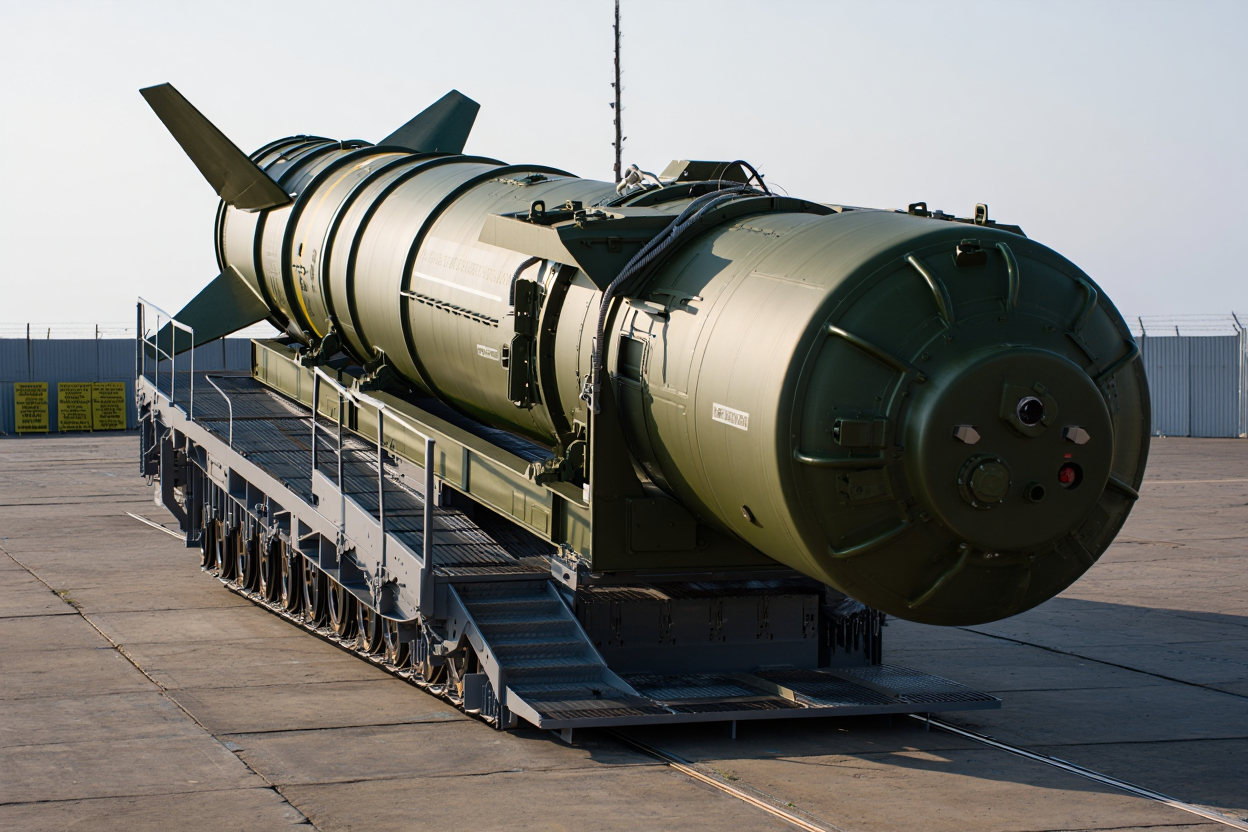
According to him, thanks to this, the missile can fly in the atmosphere for a long time, maintaining speed and altitude due to the operation of the engine and aerodynamic properties. At the same time, the characteristics of the Burevestnik are fundamentally different from those of the Oreshnik, despite the common ballistic qualities.
The Burevestnik has an aerodynamic trajectory, it flies in the atmosphere. It doesn't fall because it has wings. And the Oreshnik is a ballistic missile that was launched like a cobblestone.
Different engines
The power plants of the missiles also differ. The Oreshnik unit can be solid-propellant or liquid-propellant, but in any case it is not an air engine.
This power plant does not use oxygen from the atmosphere, since its flight through the dense layers of air lasts only a few minutes.
Earlier www1.ru reported that the Zircon missiles could not be combined with the Su-57 fighter.
Read also materials:
Container REB "Talisman" for Su-30SM and MiG-29BM was developed in Belarus
The manufacturer of BMP-3 and BMD-4M hurried suppliers of components through the court
Kalashnikov shipped a batch of SR.2M submachine guns to the customer
Never miss our newsAdd this site to your preferred sources to see us more oftenAdd on Google

















