At Novosibirsk State Technical University (NSTU), a super-light protective basket for drones has been developed, which will protect the aircraft when falling from a height of up to 10 meters. The prototype is already ready and is being tested in the youth scientific laboratory of unmanned aircraft systems. The cost of the protective net does not exceed 7 thousand rubles.
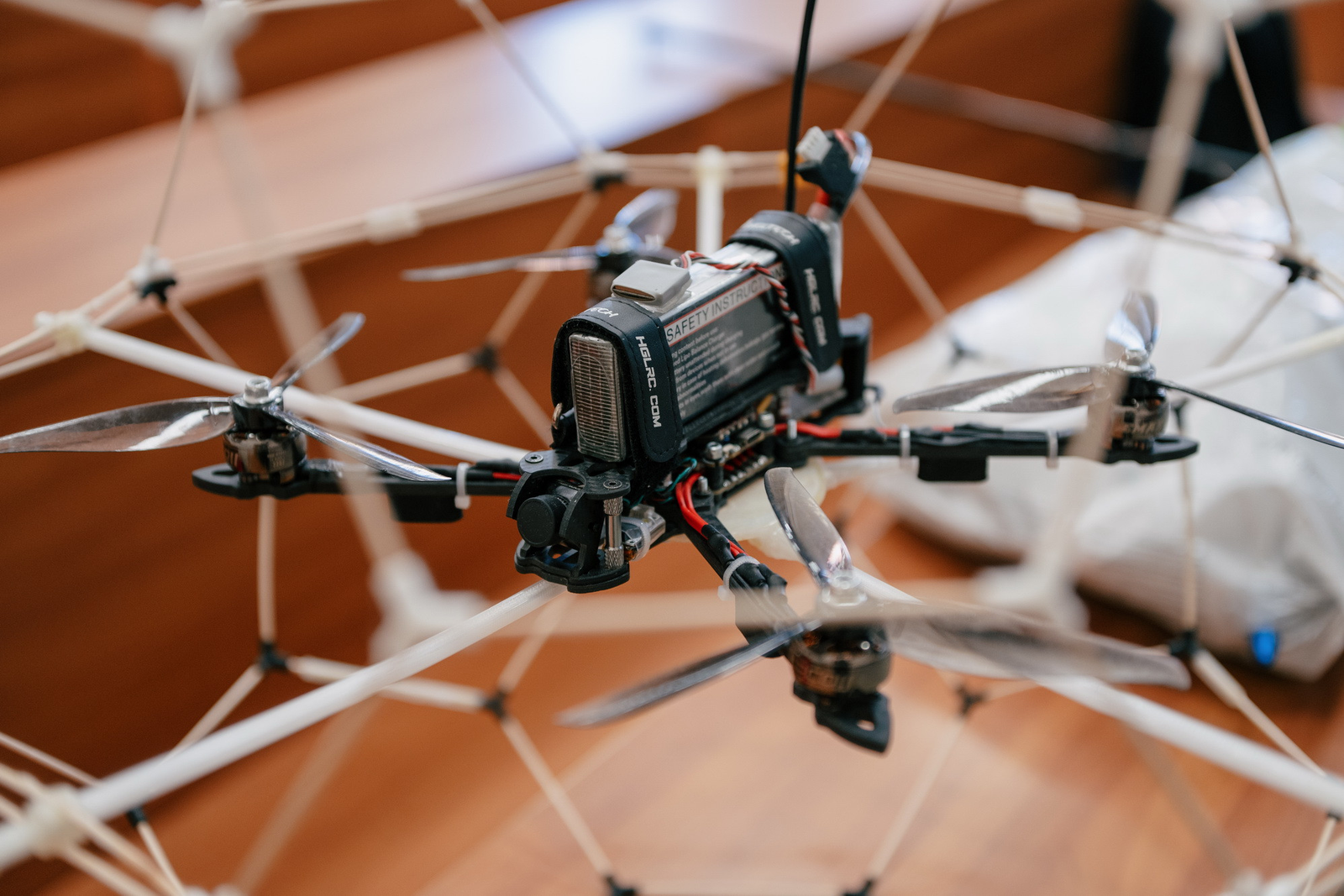
The protection is a sphere of carbon tubes (carbon fiber, a very light and durable material) and plastic jumpers printed on a 3D printer. The dimensions of the structure are about 50 by 50 centimeters, which allows you to place a seven-inch quadcopter inside. The whole structure weighs only 200 grams.
According to Dmitry Sergeev, head of the youth laboratory of unmanned aircraft systems, in the future it is planned to replace plastic jumpers with thermoplastic ones, which will make the protection even more reliable. The sphere will be useful both when working in enclosed spaces, where the drone can hit walls or the ceiling, and in open areas - for example, to protect against impacts against trees.
The cost of an aircraft with equipment can reach several million rubles, so protection will not be superfluous. At the same time, the protective net itself will cost only 7 thousand rubles - mere pennies compared to the price of a drone.
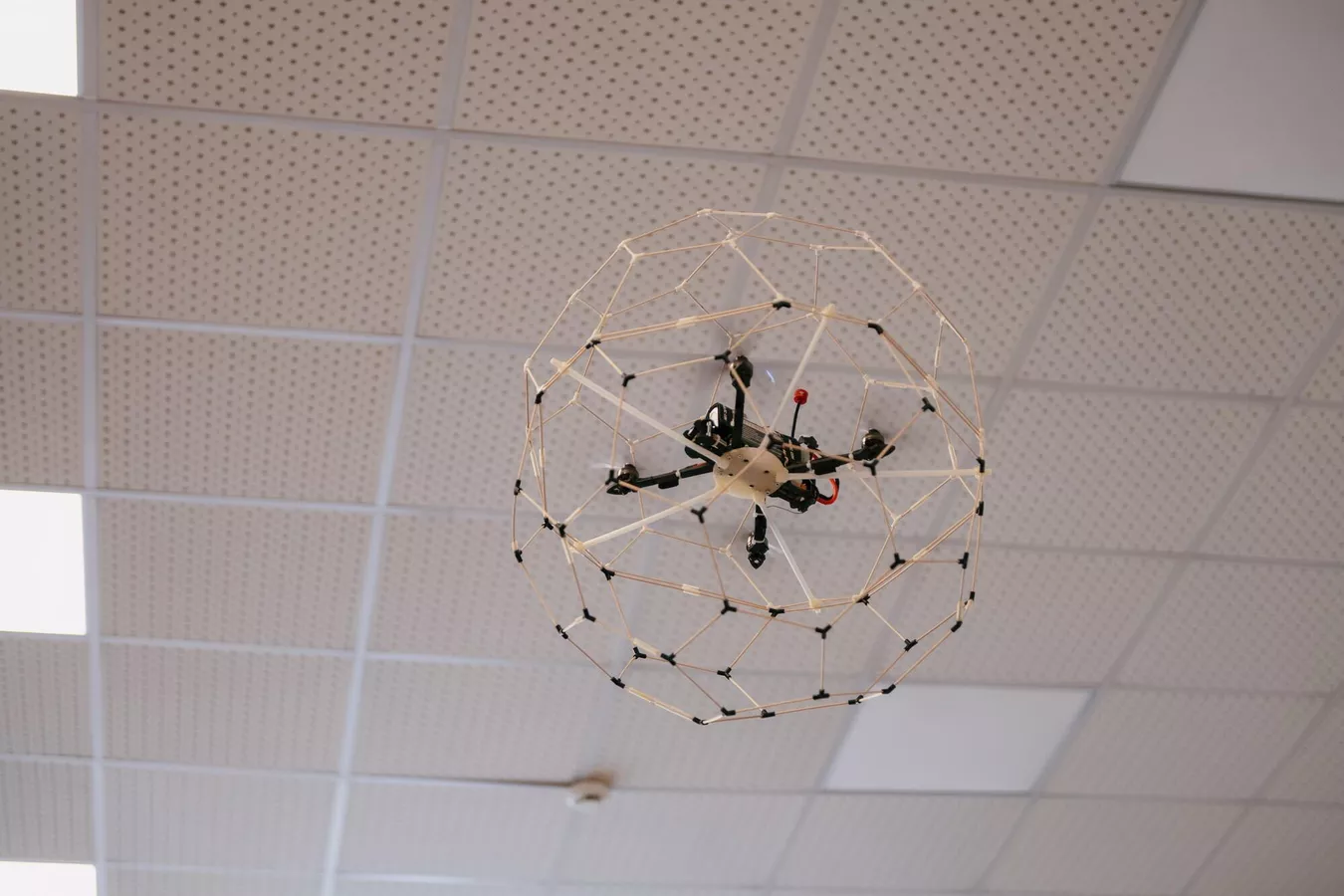
An important advantage of the development is that after the fall, the drone will be able to take off on its own, just activate the engines. The size and weight of the structure do not prevent the drone from flying normally, and its dimensions allow the device to maneuver freely.
The youth scientific laboratory of unmanned aircraft systems operates within the framework of the "Priority-2030" program. Specialists are engaged not only in protective structures, but also in the development of new types of unmanned systems, electric motors, communication modules, and also train drone control operators.
Read more materials on the topic:
Suzdal UAVs "Dandelions-3" spread their wings at exercises to combat fires at the Sokol airfield
"Gradient" magnetic material developed by Kazan physicists
Scientists from Russia have developed laser beams that do not cause diffraction and accurately transmit space data
Never miss our newsAdd this site to your preferred sources to see us more oftenAdd on Google

















