Translated with AI from the Russian original.
Russian military has increased the protection of the radar station (RLS) for counter-battery combat "Zoo-1M". The footage was shown by the Telegram channel "Military Informant".
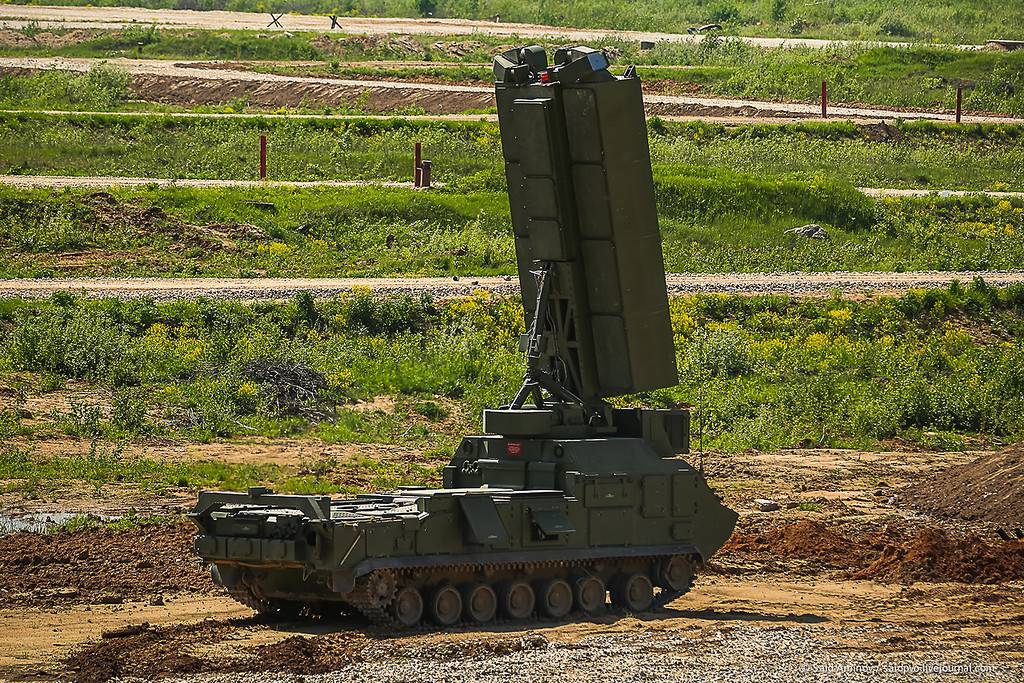
The photograph shows the 1L260 "Zoo-1M" radar, the hull of which is equipped with rubberized fabric screens. The front part and the radar of the vehicle are covered with lattice screens. Additional structures are designed to protect the radar from kamikaze drones with shaped-charge ammunition.
The "Zoo-1M" radar is designed to detect enemy firing positions. The complex detects flying ammunition and calculates the starting point and the estimated point of impact. The tracked vehicle also received steel bulletproof armor.
The "Zoo-1M" conducts reconnaissance of firing targets at a range of up to 23-27 km. Multiple launch rocket systems (MLRS) such as MLRS are detected by the complex at 45 km, and the starting positions of ATACMS tactical missiles at 65 km.
Earlier www1.ru reported that RD-107/RD-108 engines for Soyuz rockets reached a reliability rate of 99.9%.
Read more materials:
They won't reach: the capabilities of the modernized ZU-23 against drone attacks on the energy sector have been revealed
Kalashnikov first showed the flight of the latest KUB-10E kamikaze drone on video
Never miss our newsAdd this site to your preferred sources to see us more oftenAdd on Google

















