Translated with AI from the Russian original.
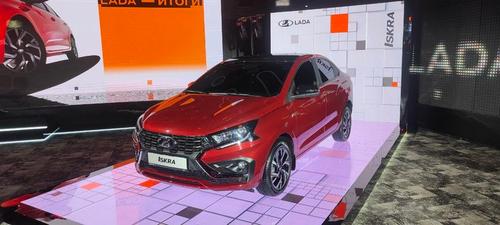
The first interior shots of the latest Lada Iskra model with an automatic transmission have appeared online. The car's interior was filmed during Russian President Vladimir Putin's visit to the AvtoVAZ plant in Togliatti.
On the Lada Iskra door, you can see a unit with control buttons for the side mirrors and power windows. The multifunctional steering wheel has control buttons for cruise control, the media system, and a button to turn on the steering wheel heating.
The instrument panel is not digital, but with traditional "wells." A small on-board computer screen is located between them.
The most interesting element turned out to be the gear lever; it is not a "manual", but a full-fledged automated system - a CVT.
Production of the Iskra will begin in April 2025. Buyers will be offered a car with 1.6-liter engines with a capacity of 90 and 106 hp, as well as a 5-speed or 6-speed "manual" or a CVT.
Earlier, the full specifications of Lada Iskra became known; the car will be equipped with a multimedia system with Yandex services.
Read more on the topic:
More than half of the borrowed components and new developments: interesting details about Lada Iskra
The first Lada Iskra will be assembled from Chinese parts
The body of the Lada Iskra will be made as resistant to corrosion as possible
Never miss our newsAdd this site to your preferred sources to see us more oftenAdd on Google

















