The Russian hypersonic missile "Kinzhal" is capable of hitting both stationary and moving objects, as well as surface targets. To date, no air defense system is capable of shooting down the "Kinzhal".
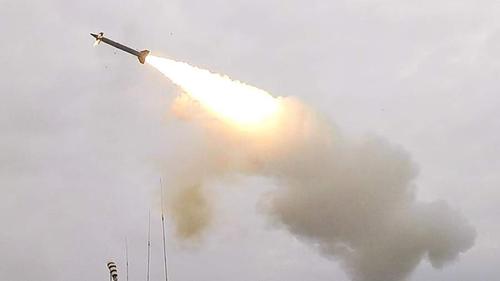
An important feature of these unique missiles is their ability to maneuver directly in flight, changing trajectory vertically and horizontally, as well as their low radar signature. Together, this makes the "Kinzhal" invulnerable to missile and air defense forces.
This missile is unique. Its speed is about 10 Mach, and it is capable of hitting both stationary and surface targets: aircraft carriers, cruisers, frigates. Almost no air defense systems can stop the "Kinzhal".
Tactical and technical characteristics of the "Kinzhal" complex:
- Maximum range - 2000-3000 km
- Maximum speed - 10-12 Mach
- Circular error probable (CEP) - 1 meter
- Warhead type - conventional or nuclear
- Warhead weight - 500 kg
- Guidance - INS with the possibility of correction from the GLONASS system, AWACS
- Engine - Solid propellant rocket engine
Earlier, experts at the CSTAMTO calledthe Russian Su-57 the most combat-tested fifth-generation fighter in the world.
Read more on this topic:
Russian frigate "Admiral Golovko" used the "Poliment-Redut" SAM system against a drone
Never miss our newsAdd this site to your preferred sources to see us more oftenAdd on Google