Translated with AI from the Russian original.
The leadership of Western countries was shocked that Russia has a super-heavy high-explosive aerial bomb FAB-3000, which the Russian Aerospace Forces used for the first time on June 20. This was stated in a Bild report by German journalist Julian Repke.
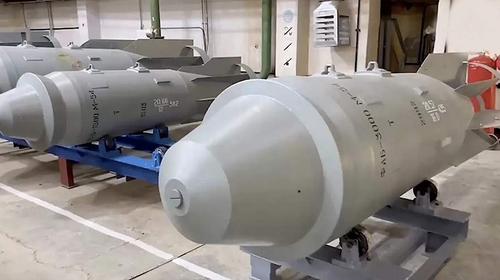
Russia has for the first time used a new"terrible bomb" weighing 3 tons - FAB-3000 with UMPC (universal planning and correction module). This is the kind of bomb that no one could have imagined existed for a long time.
According to him, the FAB-3000 with 1.2 tons of explosives has a colossal radius of destruction. Even if the bomb falls 15-20 meters from the target, it will destroy all living things around.
With such a charge, accuracy to the meter is not important, since the explosion still destroys everything within a radius of tens of meters.
The German journalist also noted the successes of the Russian Aerospace Forces and UAV crews, which inflict effective strikes on enemy positions. In addition, Russian soldiers are hitting American-made HIMARS MLRS, he concluded.
Read more on the topic:
The first use of the FAB-3000 "Tsar Bomb" with UMPC was spotted online
Destroys bunkers, bridges, shelters - what is the Russian FAB-3000 aerial bomb known for
"Iskander" vs HIMARS: Russian OTRK destroyed American MLRS with the first launch
Never miss our newsAdd this site to your preferred sources to see us more oftenAdd on Google

















