Translated with AI from the Russian original.
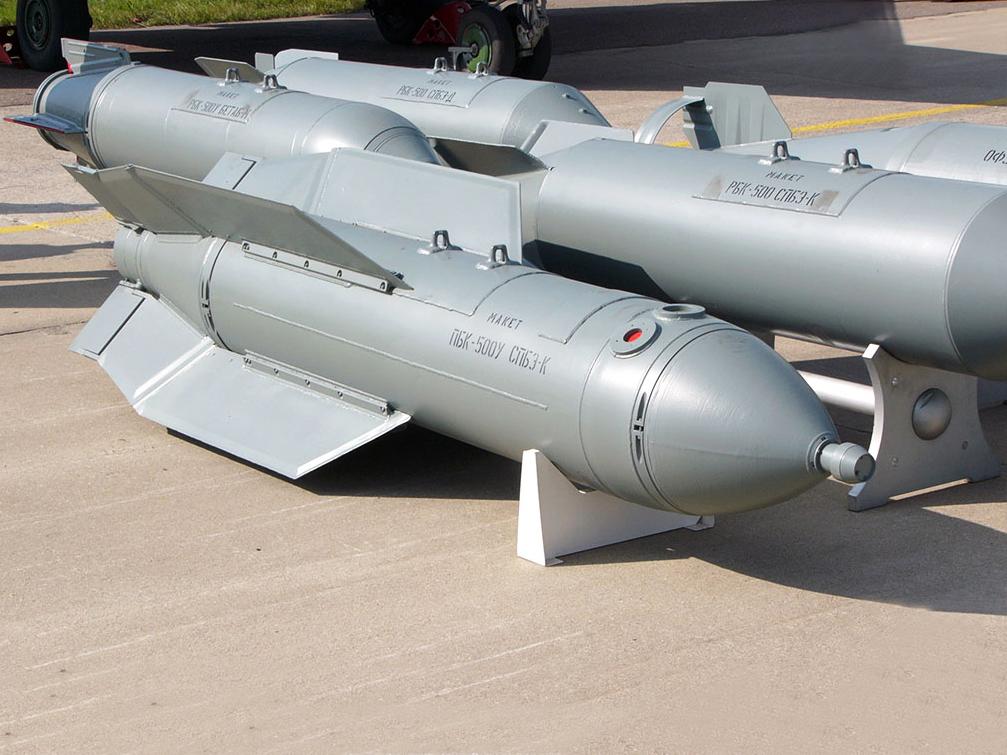
The aviation of the Russian Aerospace Forces is beginning to use cluster aviation munitions in the special military operation zone. There is no official confirmation from the Russian Ministry of Defense. But footage from Telegram channels of war correspondents and troop groups indicates that at least RBK-500 cluster bombs are being used, which have the ability to adjust and aim at a target from a long distance.
The possibility of Russia using cluster munitions in the course of the special military operation became known in July 2023. Then, the Director of Operations for the Joint Staff of the US Armed Forces, General Douglas Sims, announced that the Armed Forces of Ukraine had received cluster munitions from the United States. Russian President Vladimir Putin warned in an interview a few days later that Russia, in the event of the use of such munitions by Ukraine, reserves the right to take mirror actions.
Russia has a sufficient supply of various kinds of cluster munitions, of various kinds. Until now, we have not done this, have not used them, and we have not had such a need, despite the well-known shortage of ammunition at a certain period of time, including ours, but we have not done this.
Putin also emphasized that both the supply of cluster munitions to Ukraine and their use should be considered a crime.
As for cluster munitions, the US administration itself gave an assessment of these munitions through its employees some time ago, when the use of cluster munitions was called a crime by the US administration itself. Well, I think that's how it should be treated.
Cluster Munitions in the World
In world practice, cluster munitions are considered extremely inhumane, as they do not have a selective effect and largely affect the civilian population. Submunitions - mini-bombs delivered by a rocket or projectile - are usually guided. But when the carrier explodes, they are scattered over a vast area, even beyond the combat zone.
Many models of cluster munitions do not detonate immediately. They can lie in the ground, in the ruins of houses, infrastructure facilities for years, even after the conflict in which they were used has ended.
In this case, the damaging properties of the clusters are directed against the civilian population. An explosion occurs if you accidentally step on such a munition or even touch it.
After the use of cluster munitions, entire regions are unsuitable for life, as it is virtually impossible to demine them.
One of the latest examples of the mass use of cluster bombs is by NATO in 1999 during attacks on the territory of the Federal Republic of Yugoslavia, including Kosovo and Metohija.
The Convention on Cluster Munitions, which prohibits the use of cluster bombs, from 2008, prohibits this type of weapon from being produced, stored, used and restricts its transfer. However, a number of countries in the world have not ratified this convention, including the USA, Russia and Ukraine.
Russian Cluster Bombs
At least five models of Russian aircraft bombs with cluster design are known. First of all, this is the already mentioned RBK-500 SPBE-D, which weighs 500 kilograms and has self-aiming combat elements. Its two-spectrum infrared seeker is directed at targets that emit heat, both at enemy manpower and at armored vehicles.
The "Drel" cluster bomb weighing 500 kg is considered invisible, as it has its own electronic warfare system and is controlled by GLONASS.
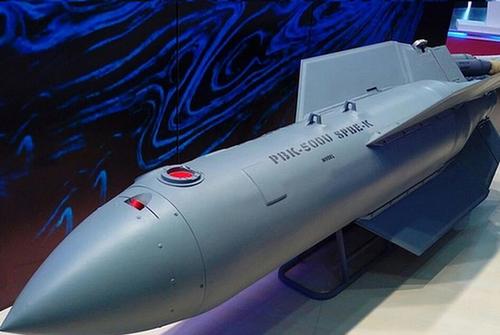
Its range is from 30 to 50 kilometers, and it has cumulative, concrete-piercing, incendiary and fragmentation shells.
RBK-500 AO-2.5RTM strikes manpower through simple shelters and light enemy equipment. One such aircraft bomb weighs 500 kg and carries 126 small bombs weighing 2.5 kg.
RBK-500U BetAB-M destroys concrete structures, airfields, highways, and even bunkers. One bomb cassette weighs 480 kg. Each of its ten combat elements has a parachute and can be controlled in terms of trajectory and fall speed, each separately.
RBK-500U PTAB-1M hits tanks and armored vehicles. One single bomb cassette weighing 427 kg contains 268 anti-tank aircraft bombs. The modernized RBK-500U PTAB weighs 520 kg and contains 352 anti-tank aircraft bombs.
Never miss our newsAdd this site to your preferred sources to see us more oftenAdd on Google

















