Translated with AI from the Russian original.
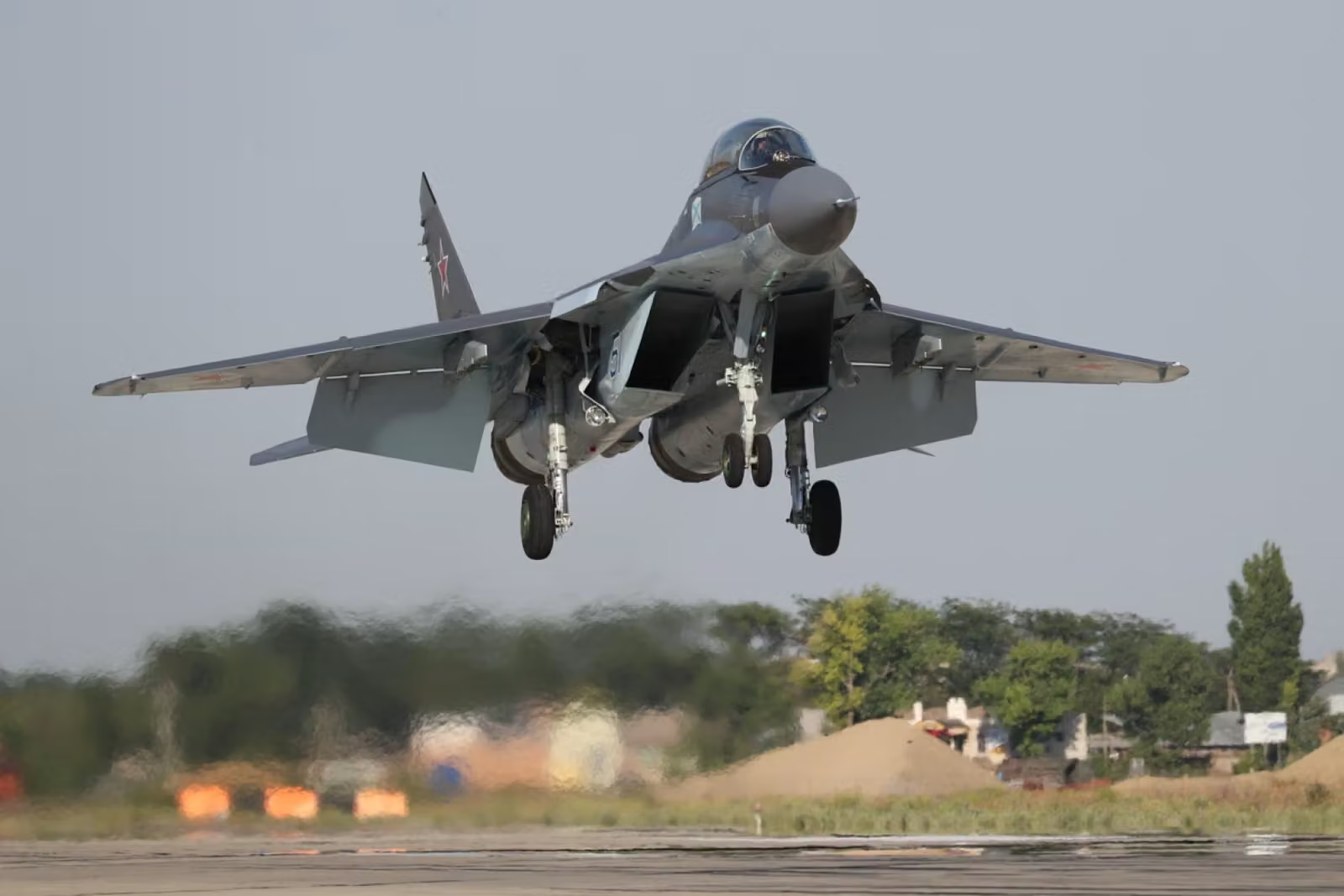
The Soviet MiG-29 celebrated 48 years since its first flight in October. The fourth-generation fighter still symbolizes speed, maneuverability, and the engineering genius of the Mikoyan Design Bureau (DB), as it is capable of taking off almost vertically - it only needs to run 200 meters along the runway.
How the "twenty-ninth" appeared
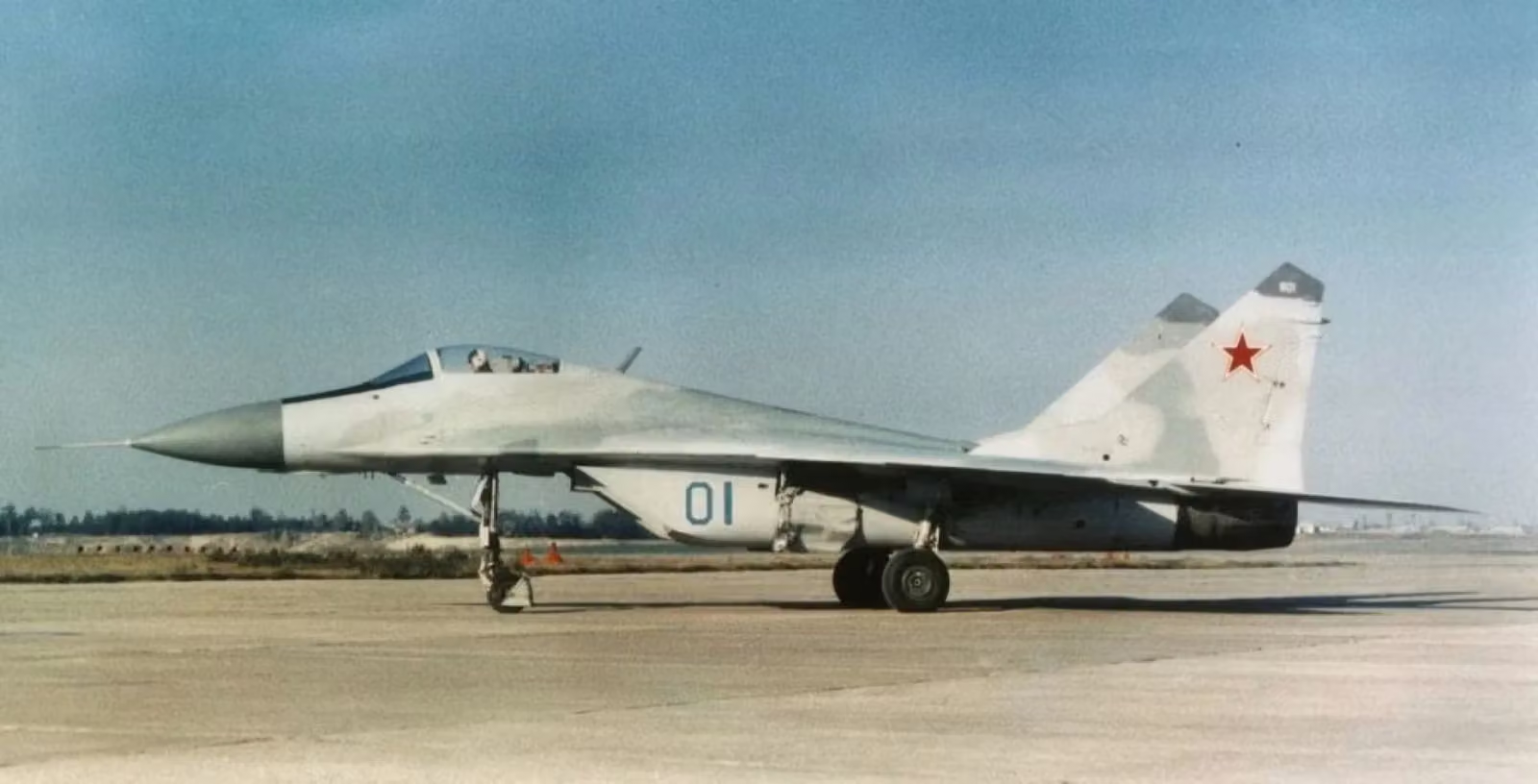
The MiG-29 was "born" in 1977 as the US response to the light F-16. Soviet designers decided that they should have two aircraft - the heavy Su-27 and alight front-line MiG-29. The development was carried out at the Mikoyan Design Bureau under the leadership of Rostislav Belyakov. Test pilot Alexander Fedotov was the first to lift the new fighter into the sky, and later Valery Menitsky and Anatoly Kvochur were at the helm.
The creators focused on a combination of speed, controllability, and survivability. The machine received two RD-33 turbojet engines with a total thrust of 16,600 kgf - almost like its own weight. Therefore, the MiG-29 is capable of taking off almost vertically, which pilots are happy to show off at air shows.
Why the MiG-29 is considered the best
The main opponent of the MiG-29 is the American F-16. It's also good, but it's an aircraft without an adjustable air intake and with one engine. As a result, the Falcon cannot fly faster than 1800 km/h, while the MiG can easily accelerate up to 2450 km/h. Our fighter is not afraid of unpaved airfields - air enters the engines through the "gills" from above, and the lower flaps are closed from dust and stones.
And the MiG-29 can also do a "bell" - a spectacular figure in which it hangs in the sky and smoothly goes down. The MiG, as the pilots themselves joke, "will ring the bell and return from the sky intact."
Legacy
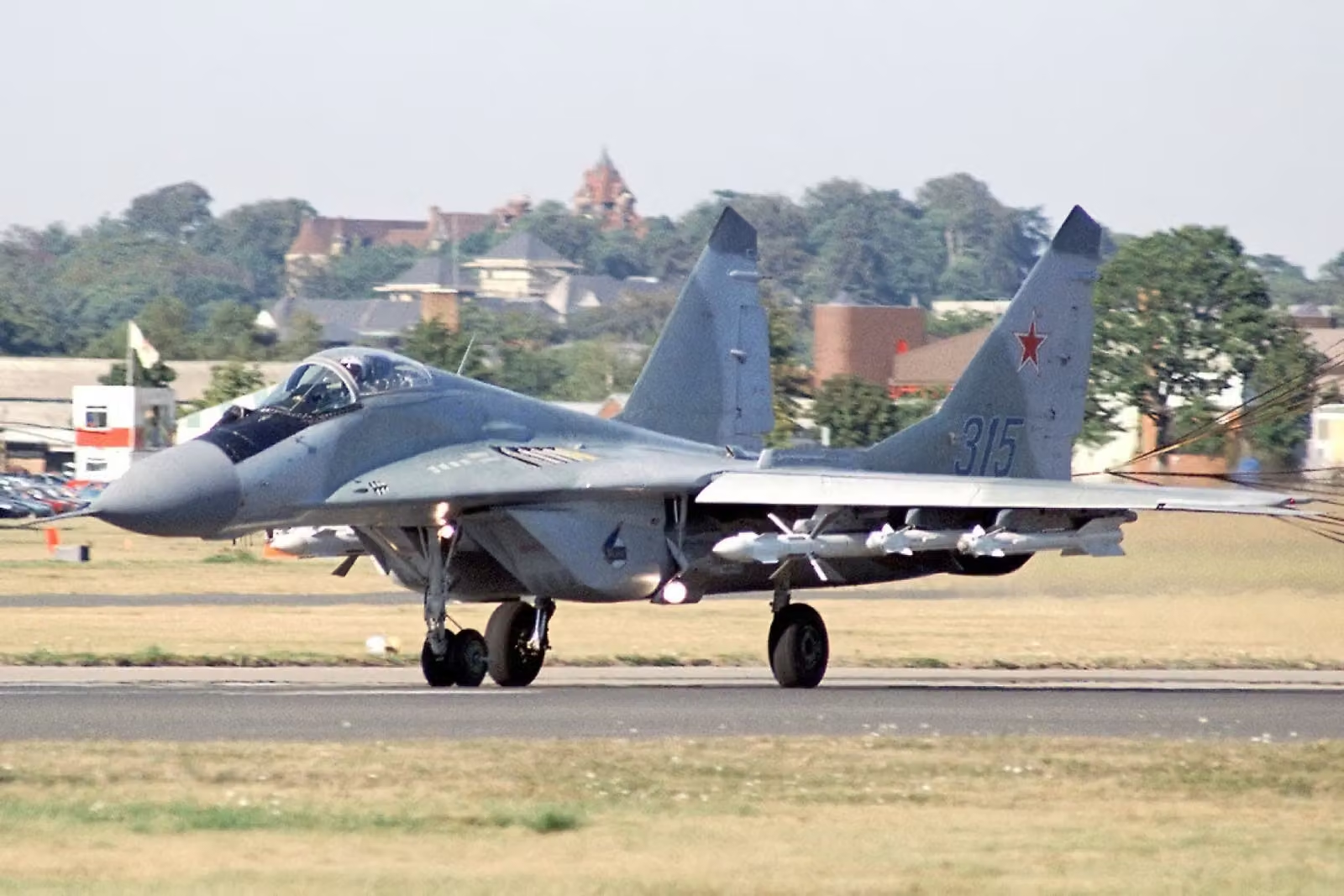
The MiG-29 became one of the first Soviet aircraft to conquer Western air shows. In 1988, it caused a sensation at the British Farnborough. Since then, the "twenty-ninth" has been modernized, ithas received new radars and missiles, but has retained the most important thing - the character of a real fighter.
As the pilots themselves say, "You get into the MiG - and it's like wings have grown behind your back." And even though it is already of respectable age, this aircraft is still capable of surprising - and not only spectators, but also opponents.
Earlier,www1.ru reported thatthe new fiber-optic FPV drone "Zanoza" developed by the "Groza" project hits 80% of targets.
Read more materials:
- Sitting on a barrel of kerosene: a military pilot declared the danger of the Mi-8 helicopter
- A missile for Comrade Kim: the Hwasong-11Ma system suspiciously resembles the Iskander-M
Never miss our newsAdd this site to your preferred sources to see us more oftenAdd on Google

















