Russia intends to resume its program to study Mars' moon Phobos and use artificial intelligence (AI) technologies to calculate a safe flight path, as well as the latest developments in engine building. The Phobos-Grunt 2 mission could launch by 2030, according to military expert Brandon J. Weichert in The National Interest.
After the failure of the Phobos-Grunt mission in 2011, experts do not rule out Russia's cooperation with China on new programs related to the study of Mars' moon.
Why Does Russia Need Phobos?
Flying to Phobos, rather than Mars, has scientific, logistical, and strategic advantages. The Red Planet's moon has low gravity, which simplifies landing a spacecraft on its surface.
Scientists believe that analyzing soil from Phobos could reveal the origin of Mars. Thanks to data obtained from the Soviet interplanetary station "Phobos-2" (1988), researchers hope to use Phobos as a "transshipment base" for manned missions to Mars.
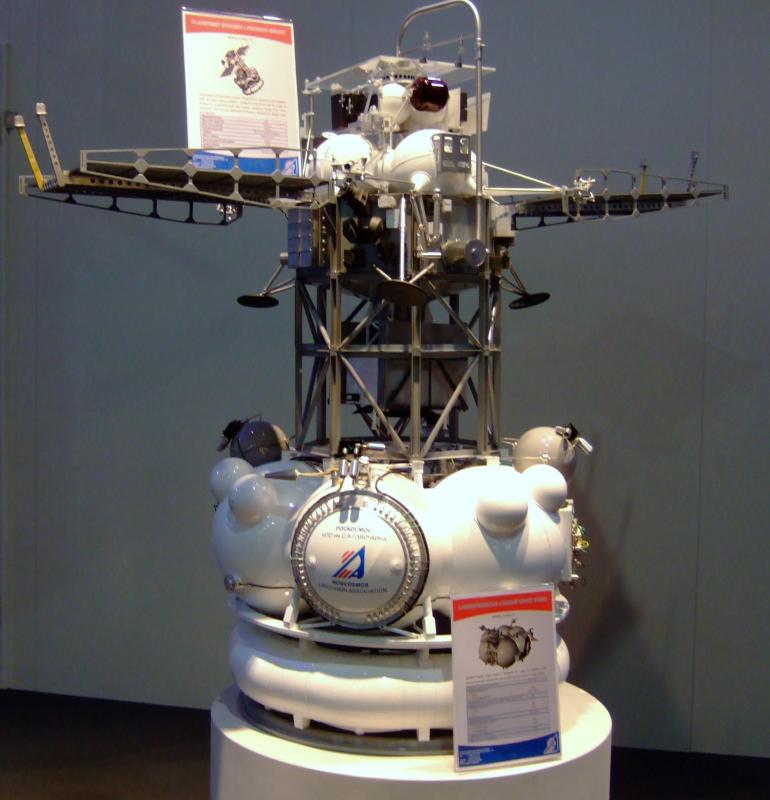
By focusing on studying Phobos, Russia will occupy its niche, avoiding competition with the United States and their rover program. In addition, the Red Planet's moon can be used as a fuel depot if ice is found there. This aligns with Russia's long-term goal of creating a base on Mars.
About the Failure of the "Phobos-Grunt" Mission
The Russian automatic interplanetary station (AMS) "Phobos-Grunt" was launched in November 2011. As a result of an emergency situation, the spacecraft remained in a low Earth orbit. In January 2012, the AMS burned up in the dense layers of the atmosphere.
Read also on the topic:
- Like 60 Years Ago, But Now in Partnership with China: The National Interest Declared a New Space Race Between Russia and the USA
- Russian Lunar Dust Monitoring Device to be Installed on Chinese "Chang'e-7" Spacecraft
- "Lunar Race" Continues: What Russia Will Do to Study Earth's Satellite Has Become Known