When astronomers began studying distant stars using the Kepler telescope, they discovered something alarming. It turned out that even stars almost identical to our Sun experience monstrous energy emissions - superflares, exceeding in power everything we have observed on our star. These cosmic catastrophes make one wonder: isn't our seemingly calm Sun capable of a similar "outburst of wrath"?
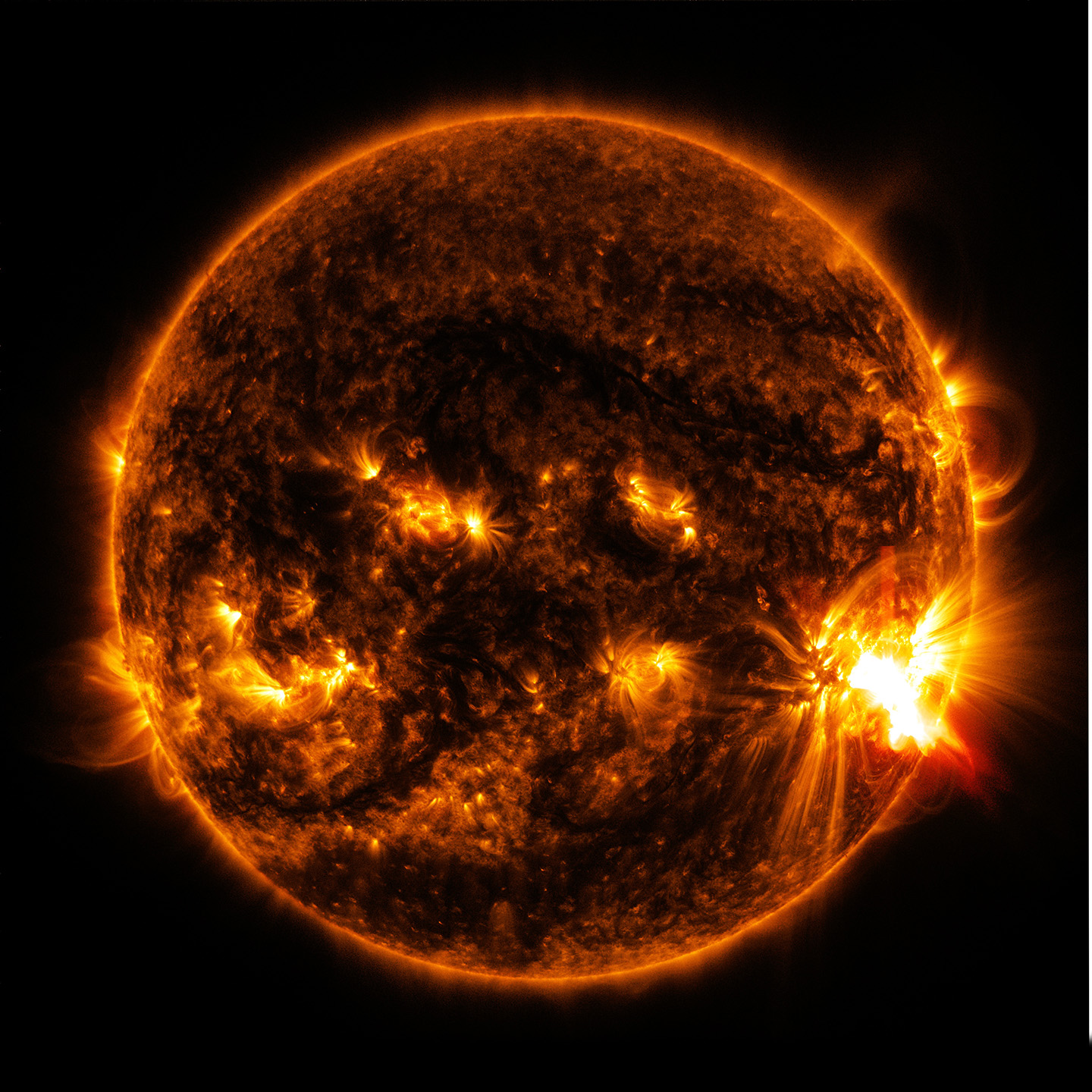
2025, according to model calculations, is the most likely year for the maximum of solar activity
Solar Storms: How Solar Activity Affects Our Lives
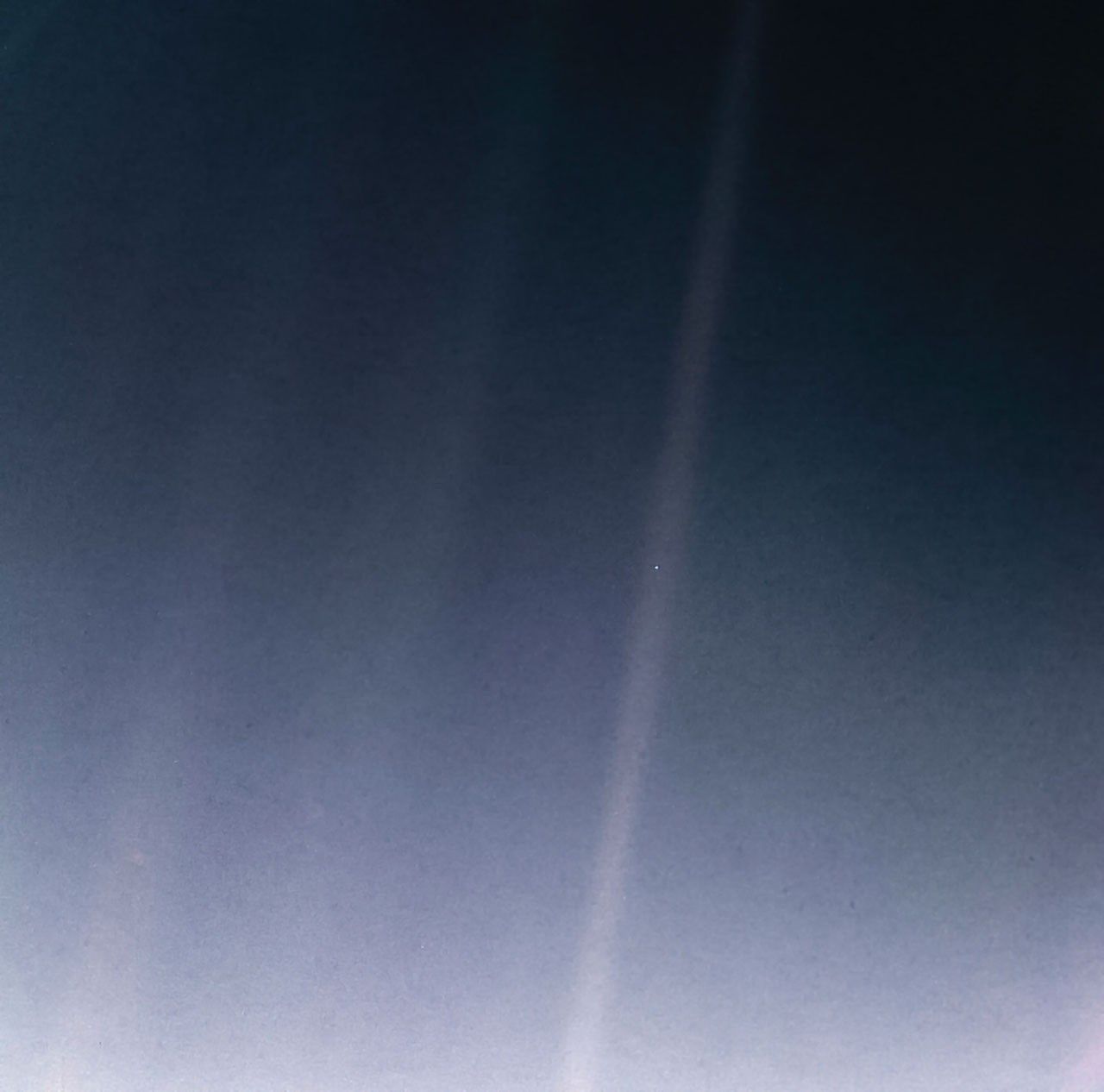
The Sun is not just a peaceful yellow ball in the sky; it is a giant thermonuclear reactor that, by sometimes throwing huge amounts of energy into space, can make our civilization feel like that very grain of sand in the photograph taken by the Voyager-1 probe. These flares, reaching Earth, can affect everything: from the operation of satellites and electronics to our well-being. Let's try to understand how solar activity changes life on the planet and what science is doing to protect us from its consequences.
What is Solar Activity?
Changes are constantly occurring on the surface of our star: spots appear (areas with lower temperatures), flares and coronal mass ejections occur. All this together is called solar activity - it has a cycle of about 11 years: periods of calm are replaced by periods of storms.
There are three types of threats that the Sun can pose to our civilization:
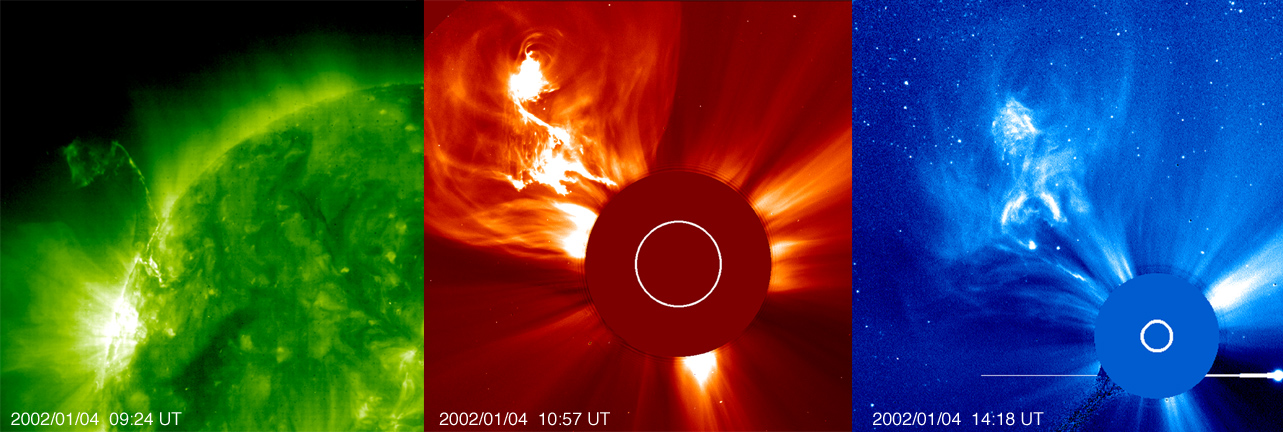
Solar flares are powerful explosions that release X-ray and ultraviolet radiation in a matter of minutes. It reaches Earth at the speed of light and causes disruptions in radio communications (especially in the shortwave range), distorts GPS signals (which is especially critical for aviation and navigation). When a flare occurs on the Sun that originates in close proximity to the central part of the solar disk facing Earth, it can lead to a powerful and prolonged solar radiation storm and cause a significant coronal mass ejection.
But what is acoronal mass ejection (CME)? - These are giant clouds of plasma flying towards Earth at speeds of millions of kilometers per hour. Reaching our planet, they can lead to serious or extreme geomagnetic storms. The latter, in turn, are capable of disabling satellites in Earth's orbit. A geomagnetic storm can damage transformers in power grids (as happened in Canada in 1989, when all of Quebec was left without electricity).
Solar wind - a constant stream of charged particles diverging in all directions from the star. It is weaker than flares andCME, but over time it destroys the solar panels of satellites and affects radio communications.
Are there ways to protect ourselves?
Now, knowing about the potential dangers, it is reasonable to ask the question of how to protect ourselves from these threats?
Modern methods of protection involve the use of screens made of aluminum, plastic with a high hydrogen content, composites, and even water to protect the ISS and satellites in orbit. The inhabitants of the International Space Station, being at an altitude of 408 km in the mesosphere layers, where the atmosphere is so thin (~0.05% of the total mass of the Earth's atmosphere), have an individual dosimeter with them, which allows specialists to determine the level of radiation received after returning to Earth. The station has a radiation monitoring system installed in the working compartments and cabins of the cosmonauts, which operates around the clock. The thickness of the outer shell of the station is 3 millimeters. Inside the station there are many instruments, and outside there is screen-vacuum thermal insulation and screens to protect against meteorites. All this also helps to protect against radiation exposure. Also, like the ISS, satellites are outside the protection of the Earth's atmosphere, so the same technologies for protection against solar radiation are used in their construction.
Despite the presence of a geomagnetic field - a shield that protects life on our planet - as well as the atmosphere, the impact of solar winds and flares still affects the surface of the planet. Long power lines work like antennas, "catching" geomagnetic currents. This can lead to overheating of transformers and, as a result, - to massive power outages. Energy companies monitor solar activity to be prepared for possible problems in advance. This is especially important at the poles and in the circumpolar regions where the magnetic field lines penetrate the atmosphere. Russian scientists aredeveloping a device that will monitor geomagnetic disturbances and prevent their negative impact on power transformers in electrical networks.

Such monitoring systems and power transformer protection devices may be especially in demand in Russian power grids located in the Arctic zone. Geomagnetic storms develop at high latitudes. But monitoring of failures in the operation of power systems due to the impact of negative natural factors is carried out only at five electrical substations of the Kola Peninsula. This is a problem. According to Rostekhnadzor, a large number of power transformer failures in the northern regions occur for unidentified reasons. Although it can be assumed that deformation of the transformer windings, "steel fire", any serious failures in electrical networks could be the result of geomagnetic disturbance
What about people? Is it dangerous for health?
There is no direct threat - the atmosphere and the Earth's magnetic field reliably protect us from solar radiation. But there are nuances: passengers of airplanes on polar routes may receive slightly more background radiation, weather-sensitive people sometimes feel unwell during magnetic storms. Such people should monitor forecasts of solar activity and try to avoid stress and overloads on days of solar activity. Satellites (SOHO, SDO) and ground-based observatories (for example, Pulkovo Observatory in Russia) constantly monitor the Sun. They record flares and emissions to give a warning in a few days.
From Flares to Superflares
Ordinary solar flares are a powerful, but quite common phenomenon. They happen regularly, and the Earth, protected by the magnetic field, copes with their consequences. But what if a superflare occurs? Scientists have long been studying these phenomena - rare, but monstrous in strength energy emissions, which are tens of times more powerful than the strongest recorded flares. If an ordinary flare is a gunshot, then a superflare is a thermonuclear explosion.
Astudy published in the journal Science at the end of 2024 identified 2889 possible superflares on 2527 sun-like stars. This means that such events occur approximately once a century. Studying solar analog stars has revealed an amazing pattern. Although most "solar twins" behave calmly, about 1% show frightening activity. One such star staged 57 superflares in 500 days. This makes one wonder: isn't a similar potential dormant in our star?
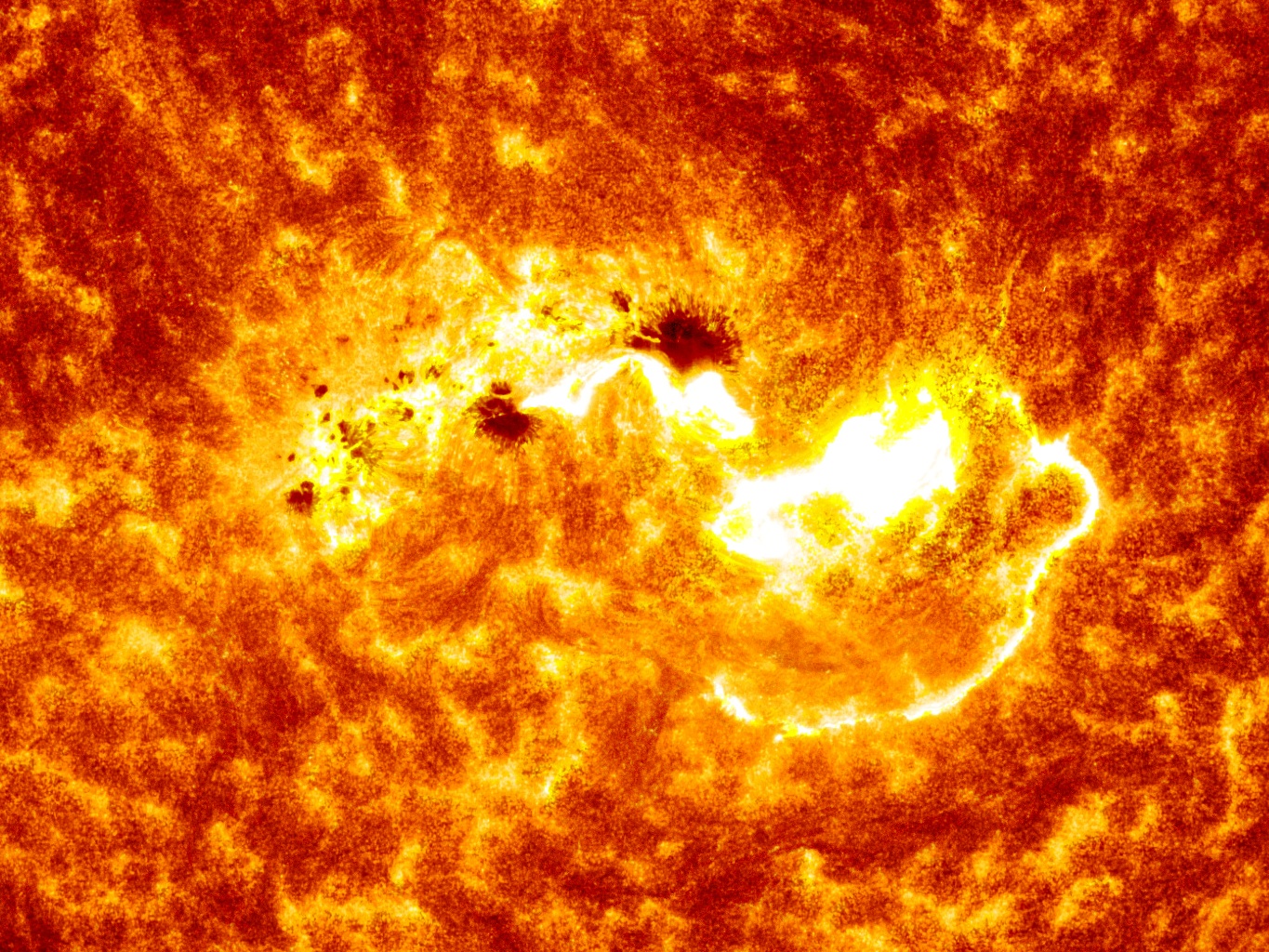
The physics of our star imposes natural limitations. Calculations show that the Sun is unlikely to be capable of emissions more powerful than 10^34 erg (a unit of work and energy) - this is only 100 times stronger than theCarrington event. For comparison, some active stars with a stronger magnetic field produce flares thousands of times more powerful. Historical records confirm these calculations. Nothing more powerful thanCarrington has been observed in the last 200 years. Even the mysterious event of 775, which left traces in tree rings, was unlikely to exceed 10^32 erg.
If we extrapolate data from other stars, a Carrington-level superflare can occur on the Sun once every 100-200 years. More powerful ones - once every few millennia. The problem is that we don't know exactly when the next superflare will occur. It could happen tomorrow, or it could happen in a hundred years. The consequences of such an event for our civilization, entangled in wires and dependent on satellites, are much more vulnerable than for the telegraph operators of the 19th century. It remains to be hoped that the warnings of scientists will not go unheeded, and humanity will have time to prepare for the cosmic test.
Read more related materials:
How do magnetic storms affect the heart?: Russian scientists shared new data
Every story has an end: the failed mission to Venus will end with a fall to Earth
Powerful flares on the Sun can start at any second: spots of incredible size were recorded in the CrAO