On the morning of June 30, two M-class flares, the second-highest power class, occurred on the Sun – for the first time since June 21. The Institute of Applied Geophysics (FGBU "IPG") registered an M1.3 event at 04:16 Moscow time, which lasted almost two hours. Another flare, M1.4, occurred at 09:40 Moscow time and lasted 39 minutes.
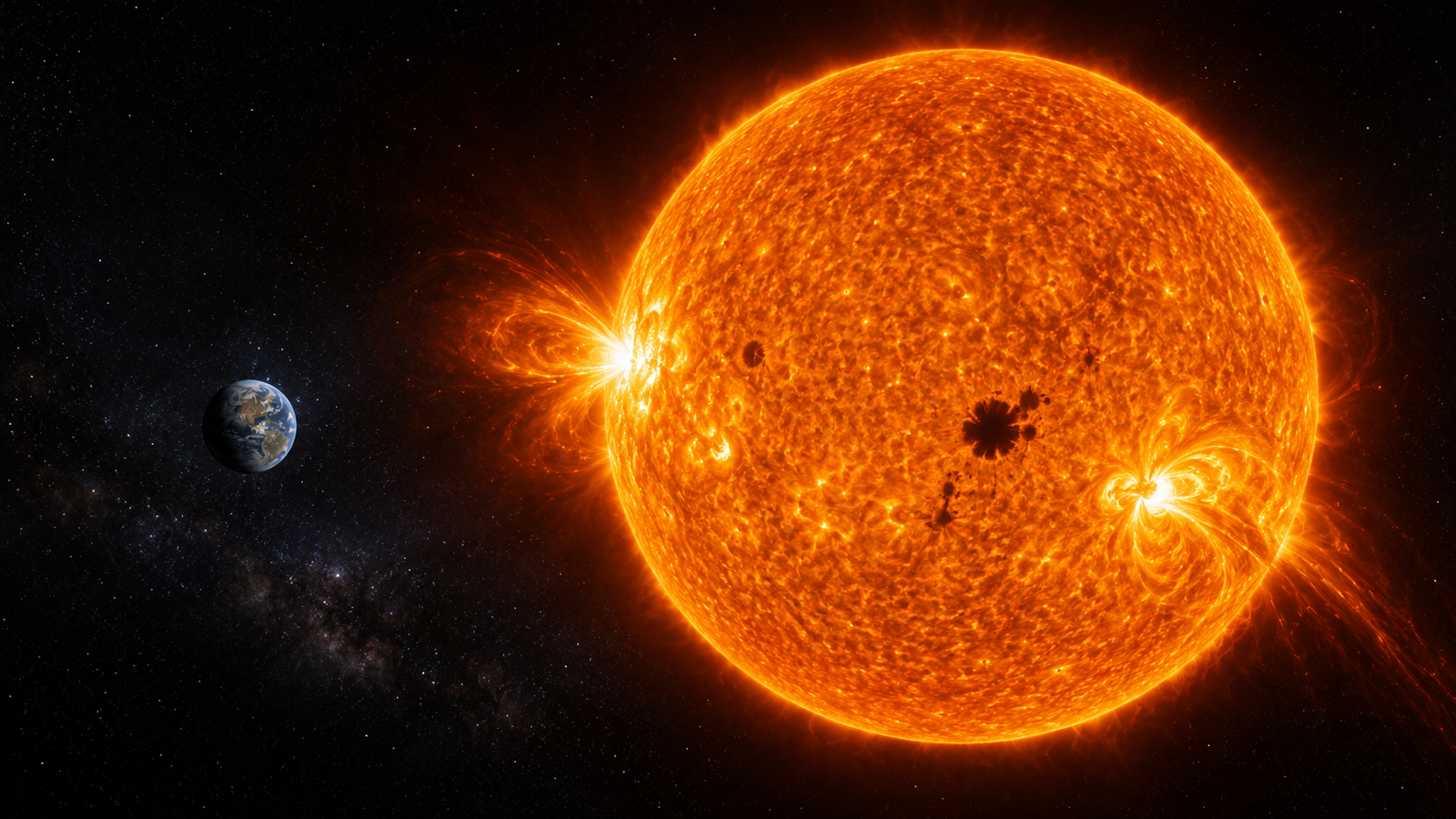
Solar activity has accelerated significantly. Over the past 24 hours, scientists have recorded 17 flares – there were eight the day before, and only five the day before that. Now, only the highest level remains unconquered for the Sun – X-class flares.
Particular attention to what is happening is due to the location of large sunspot groups: they are on the side facing Earth. Corona images show that two active regions are connected by a complex magnetic structure and are exchanging energy.
Such a connection can partially release excess energy, but at the same time, it turns into a large magnetic reservoir. Scientists admit: it is not yet possible to accurately predict when and with what force the next eruption will occur.
The Laboratory of Solar Astronomy of IKI RAS and ISZF SB RAS previously warned: an X-class flare in the next two to three days, with such an arrangement of active centers, could cause a frontal impact on Earth. However, the current M-class events themselves do not yet mean a magnetic storm – this requires a plasma ejection towards the planet.
Read more on the topic:
Never miss our newsAdd this site to your preferred sources to see us more oftenAdd on Google