Translated with AI from the Russian original.
The most active audience of buyers of apartments with automation turned out to be men aged 35–44 – they account for 35% of the demand, but pensioners are close behind. About 20% of those interested in such housing are respondents over 65, another 18% are aged 55–64. For comparison: young people under 34 accounted for only 11%. Such data was obtained by TASS based on a survey conducted by the analytical center of the development company MR.C
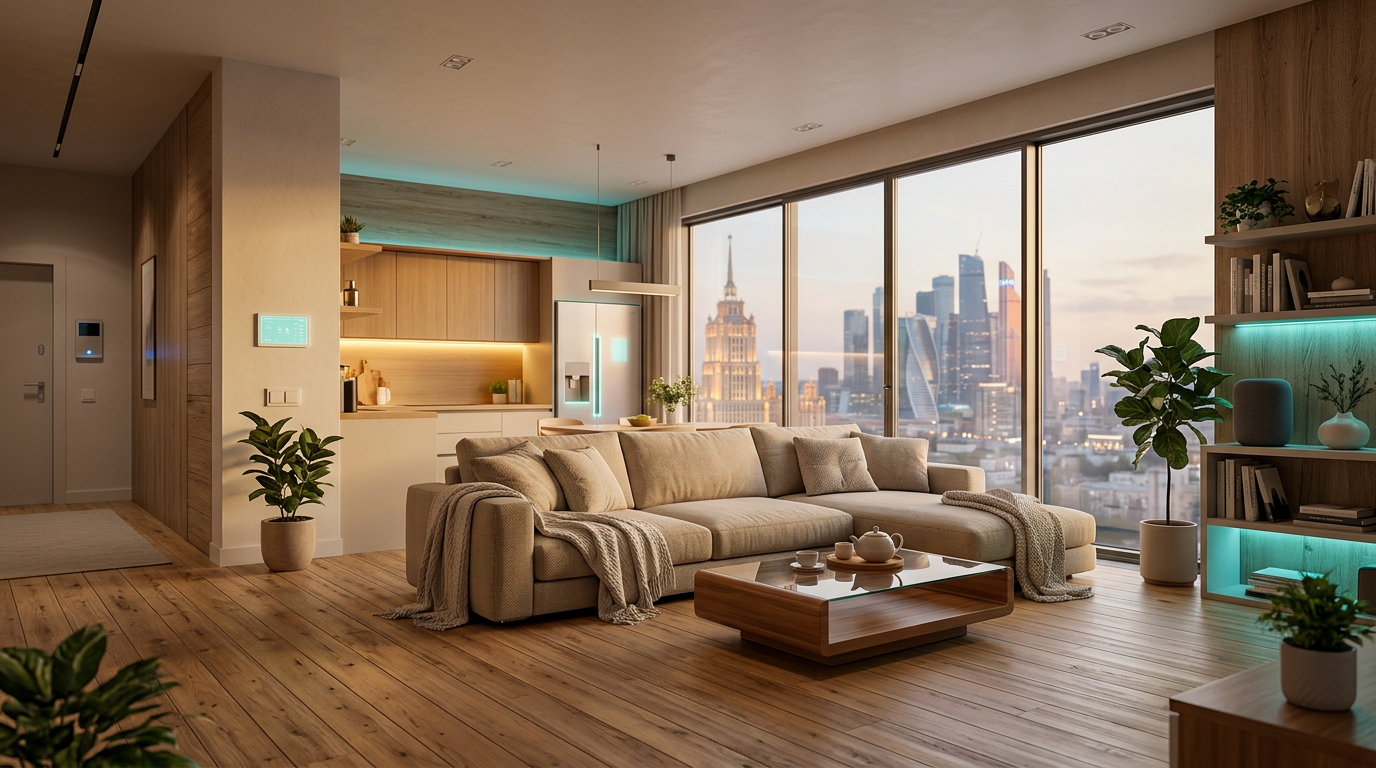
A "smart home" is understood as a single digital environment of a building, where engineering systems – lighting, climate control, security, access control – are connected into a common circuit and controlled via an application or voice assistant.
A "digital" apartment in a new building is housing with a pre-installed set of leak, smoke, and motion sensors, smart meters, an intercom with face recognition, and the ability to remotely let guests in. All this is embedded at the construction stage, and not purchased by the resident after the fact.
The main driver of demand among the older audience was not a craving for gadgets, but engineering simplicity. Modern systems are designed with clear interfaces and a minimal number of settings – this, according to MR analysts, is critically important for the older generation. Scenarios that accompany everyday routines are in demand: issuing temporary passes for guests, calling a taxi with a voice assistant, automatic control of light and climate. Developers took into account the peculiarities of perception of elderly users, making the interaction intuitive.
Developers are already noting that buyers are willing to pay extra for popular digital scenarios, which means that the standard of a single digital environment of a building must be laid down at the design stage. The survey was conducted on the VK platform among 1.2 thousand residents of large cities of Russia.
"MegaFon" recorded a 2.5-fold increase in traffic on websites for selecting smart home devices in 2026.
Earlier, "Sber" updated the "Smart Home" platform, adding AI scenarios through dialogue with GigaChat and the "I'm not home" mode to save resources. Over the past year, users have created more than 100 thousand personal AI scenarios.
Read more on the topic:
Never miss our newsAdd this site to your preferred sources to see us more oftenAdd on Google

















