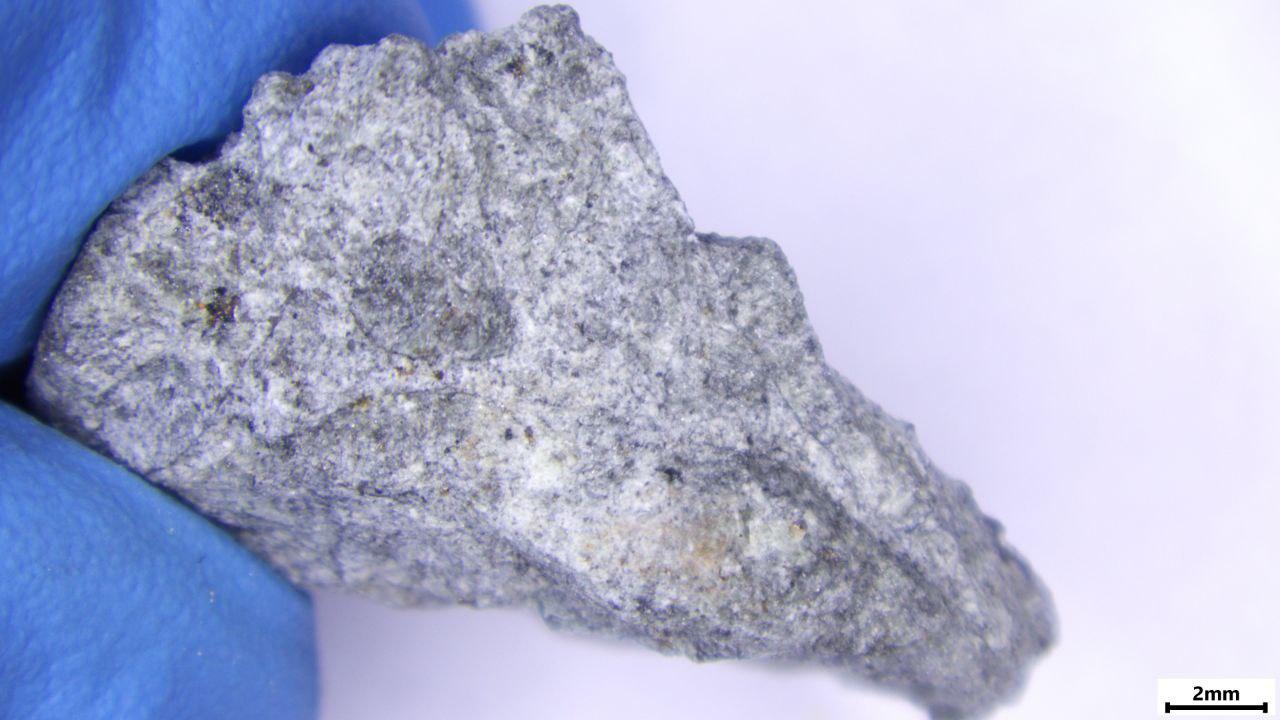
A bright bolide, which residents of Moscow and the Moscow region observed in October, turned out to be a stony meteorite. Scientists from the V.I. Vernadsky Institute of Geochemistry and Analytical Chemistry confirmed its natural origin and classified it as ordinary chondrites of the LL6 group.
On October 27, several videos on Telegram showed a bright fiery trail in the sky over Vidnoye, Dubna, Ramenskoye, Zhukovsky, Lyubertsy, Krasnogorsk and Odintsovo. The flight duration was more than 35 seconds, and the direction of movement was from east to west. Astronomer Stas Korotky clarified that the object itself was moving approximately 500 kilometers north of Moscow. Initially, scientists discussed whether it could be space debris or a meteoroid of natural origin.
On November 6, the institute announced the discovery of the first samples of the substance that fell after the bolide flew over the Tver and Novgorod regions. The samples have already been sent to the laboratory of meteoritics and cosmochemistry of the institute, the Museum of the History of the Universe in Dedovsk and the Ural Federal University in Yekaterinburg. The official name of the meteorite will be related to the geography of the place of fall.
Preliminary studies have shown that the meteorite belongs to stony ones, namely to the LL6 group. In a comment to RIA Novosti, Stas Korotky noted that the space object damaged the roof of a private house in the Novgorod region, which made it possible to discover it. On social networks, residents of the Moshensky district report that they heard a characteristic rumble of a meteorite falling on the morning of October 27.