Rail welding plant RSP-M has started welding 800-meter-long rail strings for the future Moscow - St. Petersburg high-speed railway. The process begins with the incoming inspection of 100-meter rails, each weighing 6.5 tons, which are fed onto the conveyor.
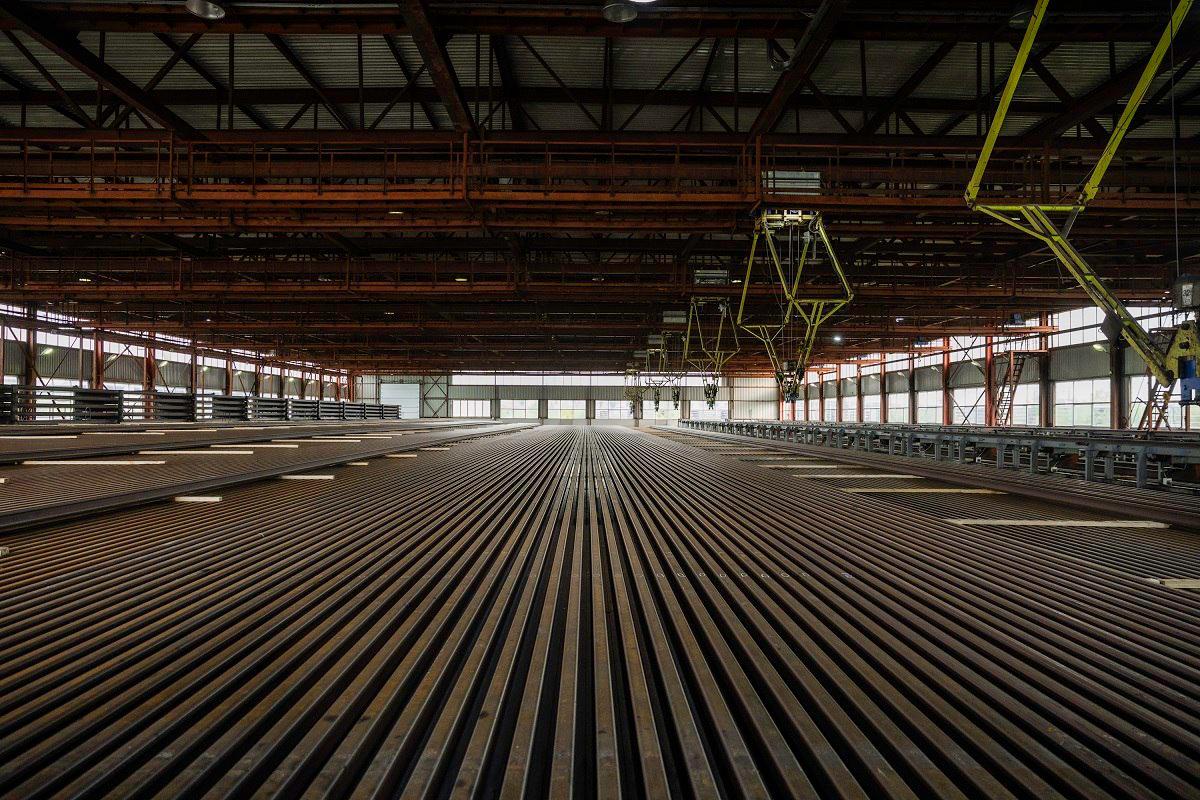
Eight 100-meter rails are welded into a string. This operation is necessary to minimize joint connections during the laying of high-speed railway tracks and will ensure maximum smoothness and safety of the train's movement. Rail welding takes place simultaneously on two lines by one shift team, the estimated capacity of RSP-1 is 650 km of welded rails per year.
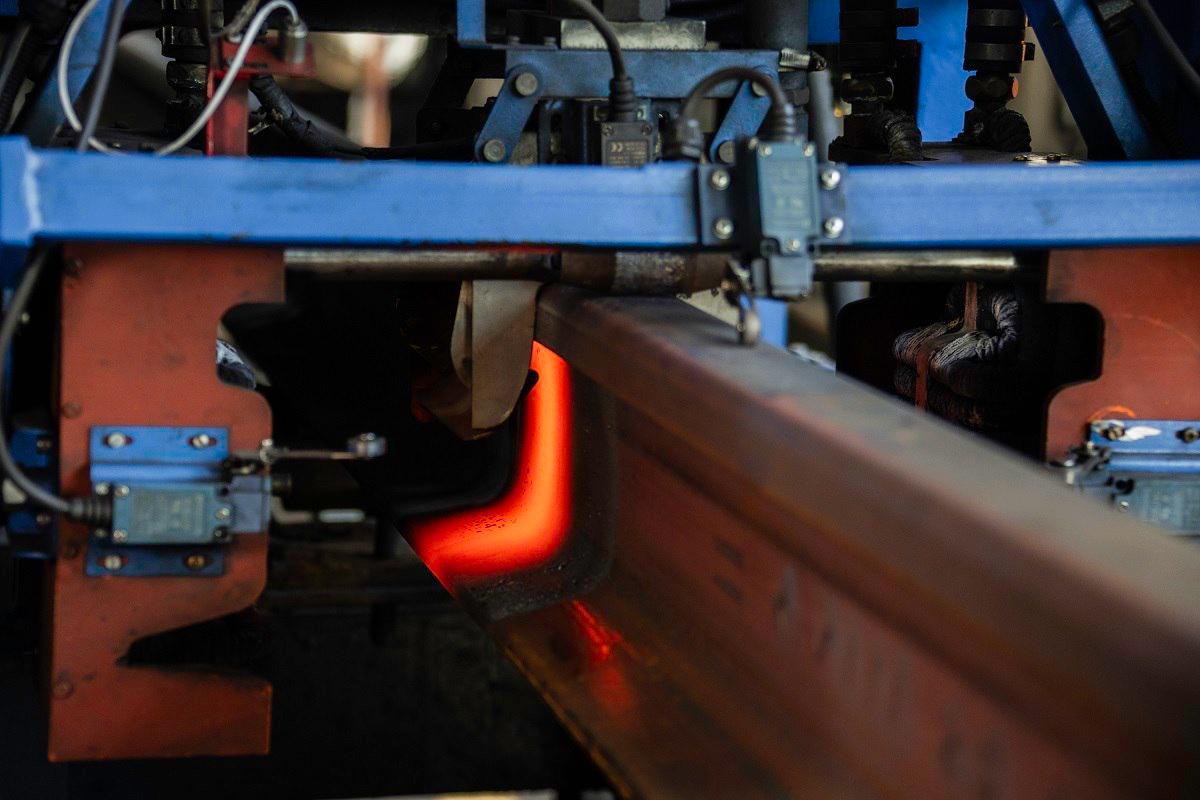
The first stage of welding includes electric welding, in which an electric arc arises between the ends of the rails, melting the metal. Under pressure, the rails are fused together, after which the welded string is sent to the rough grinding and hardening station. During hardening, the weld is heated to 945 degrees and abruptly cooled with air. This ensures the strength of the connection. The process is completed by fine automatic grinding and final flaw detection of the welded tracks to confirm the quality of the products.
Currently, the enterprise has already received 7 thousand tons of rails, which, after being welded into strings, will be sent to the laying site. This will speed up the construction of the main line.
Earlierwww1.ru reported that the production of a high-speed train for the HSRhas started at Ural Locomotives.
Read related materials:
Production of the Mozhaets-6 satellite completed: it will become part of the Russian orbital group
Gazpromneft-Aero Company Involved in Restoration of Tu-144 Passenger Aircraft
Avtotor Receives Vehicle Type Approval for E-Nyx Prof Electric Cargo Quadricycles
Never miss our newsAdd this site to your preferred sources to see us more oftenAdd on Google