The American magazine about military equipment "Military Watch Magazine" has prepared a top 5 of fighter aircraft with the best and most powerful engines in the world. Three of the five places in this ranking were taken by the Russian MiG-31M interceptor and MiG 1.42 fighter, as well as the fifth-generation Su-57M fighter. At the same time, two of these fighters never went into serial production and did not end up on the balance sheet of the Russian Ministry of Defense, but received worldwide recognition.
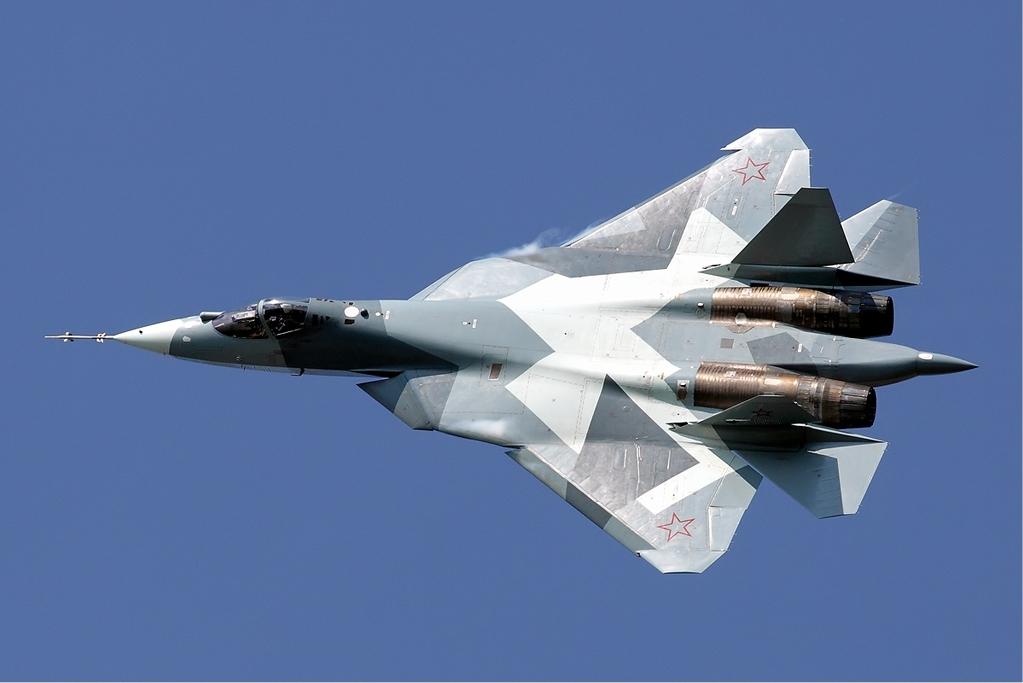
The top 5 also included the Chinese fifth-generation J-20 fighter and the American fifth-generation F-35 fighter. And here are the engines that broke into the leaders from among the Russian fighters.
Engine D-30F6-M for MiG-31M
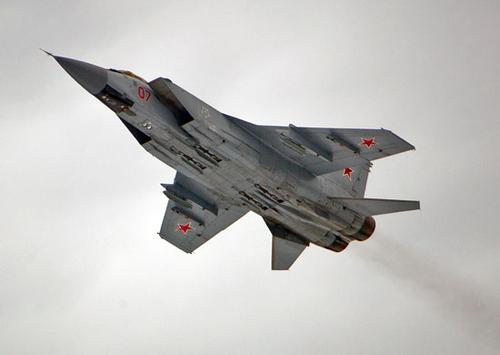
This is the leader in terms of power, its thrust is 195 kN. The D-30F-6M was assembled on the basis of the D-30F-6 with a thrust of 152 kN, which is still operating on the MiG-31.
The economical D-30F-6M was to be installed on the MiG-31M, this new fighter was to enter service with the Union in the early 1990s.
This would have allowed the MiG-31M to fly even faster and higher, carry a radar that was even much larger, and carry the world's largest missile arsenal, including six large R-37 missiles and many smaller missiles.
The plans of aircraft designers were thwarted by the collapse of the USSR. The interceptor and its engine were fully ready for production by 1994, but its serial production in Russia was impossible at that time.
However, the "prototype" of this super interceptor MiG-31 with a thrust of 152 kN still retains "overwhelming superiority in flight performance" among interceptor fighters at the world level.
Engine AL-41F for MiG 1.42
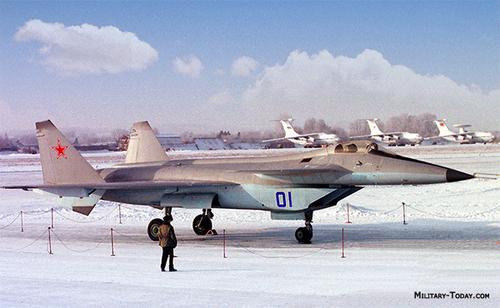
Another leader among the world's ever-produced fighter engines in terms of power was also developed in the USSR. The AL-41F began to be created in 1979 for the MiG 1.42, a new fighter to ensure air superiority.
This aircraft was significantly more ambitious for its time than the later fifth-generation Su-57 fighter produced in Russia. Its production, according to various estimates, cost about twice as much with a significantly longer service life and operating costs. However, the engines of the AL-41F aircraft developed much greater thrust and had a higher thrust-to-weight ratio than any others used on twin-engine fighters to this day, and, according to various estimates, had a maximum thrust of 191 kN.
The collapse of the USSR practically froze this project as well. However, if the MiG-31M project was abandoned in Russia almost immediately, then the MiG 1.42 lasted until the beginning of the 2000s. Its engine underwent intensive testing "including at high supersonic speeds using a number of aircraft as test benches, including the MiG-25 interceptor and the Tu-16 bomber." But in the end, the project turned out to be expensive for the Russian defense industry of those years: the serial production and modifications of the MiG 1.42 were also abandoned.
It is noted that the developments of the MiG 1.42 project did not pass without a trace. The ideas of the creators of the AL-41F were later used, in particular, to create an improved derivative of the AL-31 engine in the Su-27. But this engine turned out to be weaker and received a thrust almost 30 percent lower than its prototype. The AL-41F-1S has only 137 kN.
Engine AL-51F for Su-57
Even with the engines that the Su-57 already has, and are constantlybeing updated, they have no competitors andoutperform F-35 and J-20 in their category in some parameters.
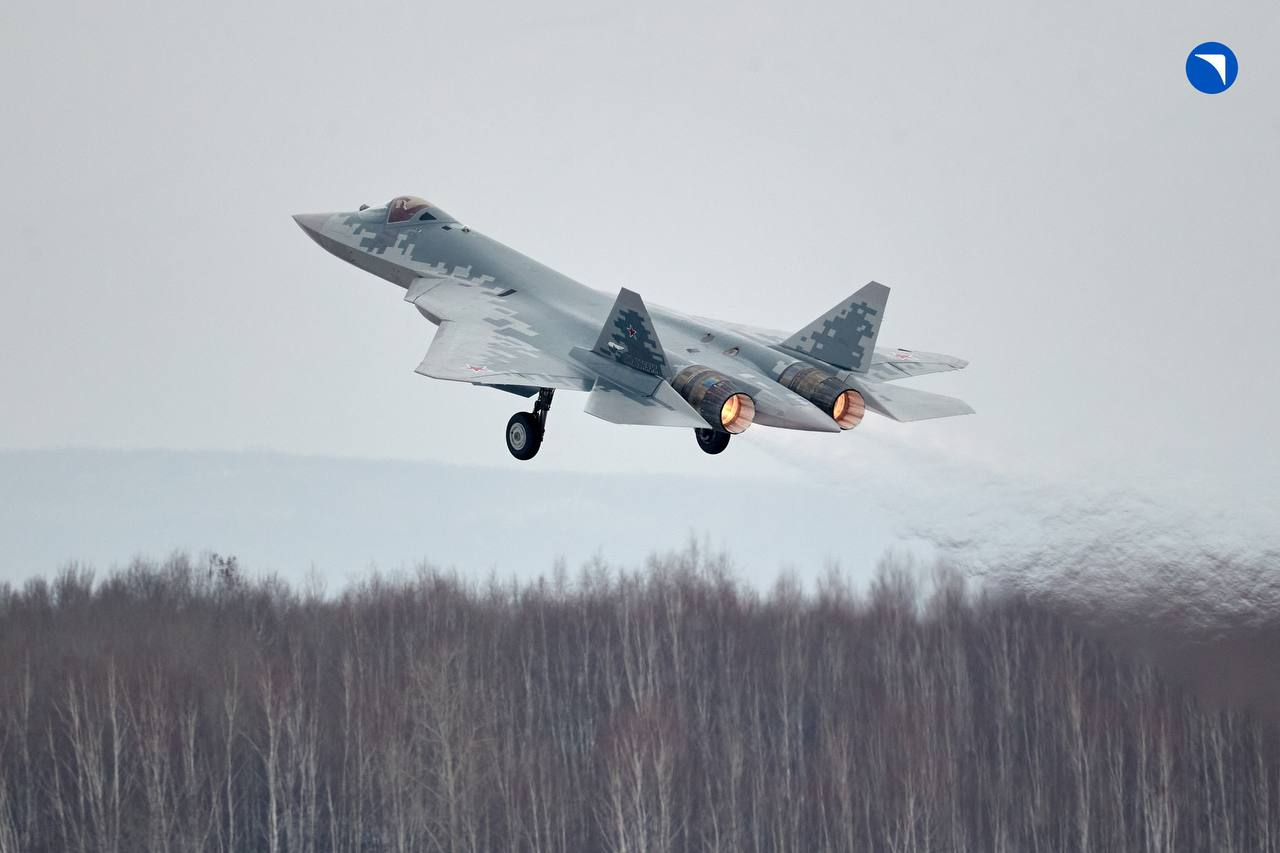
With the AL-51F, this technological gap for Russia will increase. It has not yet entered serial production and serial installation on Russian fighters, but it is actively preparing for this.
The Su-57 was designed to provide minimal operating costs and maintenance needs, while the AL-51F, respectively, is a highly efficient design with much lower lifetime costs than the AL-31 and AL-41F-1 variants currently equipped on Russian fighters.
This engine with a thrust of 180 kN is"significantly more powerful than the most powerful Western engine" installed on the twin-engine F-22 F119 fighter, whose maximum thrust is 12 percent lower and amounts to 156 kN.
At the same time, the AL-51F is weaker than the D-30F6-M and the AL-41F. However, the authors of the rating note that the engine's thrust vector control capabilities, its economical fuel consumption and the relatively light weight of the Su-57 will still make the fighter"the most maneuverable in the world at low speeds and, possibly, [the most maneuverable in the world] at high speeds". In the latter category, it will compete with the J-20.
Read materials on the topic:
Supersonic multi-purpose tactical aviation aircraft: a new patent solution from UAC
Overwhelming advantage, world leadership: the Russian MiG-31 fighter worries the USA
"Vicious Bird" Su-35 - the best Russian fighter - "The National Interest"
Never miss our newsAdd this site to your preferred sources to see us more oftenAdd on Google

















